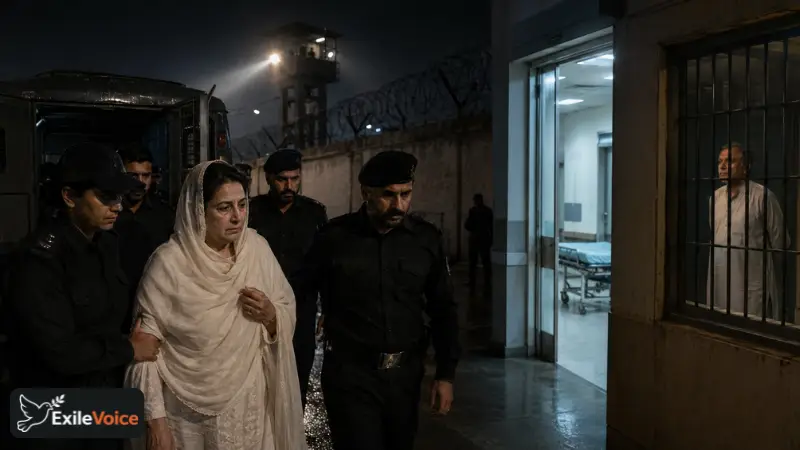
The recent reports emerging from Adiala Jail regarding the health and treatment of Bushra Bibi, the former first lady of Pakistan, have raised significant alarms within human rights circles. According to insiders and political analysts, Bushra Bibi was recently shifted to Al-Shifa Trust Eye Hospital in Rawalpindi under a veil of secrecy. This clandestine movement, conducted without the prior notification of her family or legal counsel, points to a troubling pattern of administrative opacity that challenges the fundamental rights of incarcerated individuals.
The choice of Al-Shifa Trust Eye Hospital is notable. Managed largely by retired military personnel, the facility offers a controlled environment where the flow of information can be strictly regulated. Previous instances have shown that medical procedures, including a painful retinal detachment surgery, were performed on Bushra Bibi without subsequent recovery time in a clinical setting. Despite medical advice suggesting at least three days of hospitalization for hygiene and monitoring, she was promptly returned to jail. Such actions not only risk the physical health of the prisoner but also violate the standard operating procedures outlined in the Pakistan Prison Rules and International Human Rights conventions.
This situation is not isolated. Former Prime Minister Imran Khan has faced similar treatment, with medical checkups at PIMS hospital conducted with minimal transparency. These practices suggest a strategy of "medical isolation," where the state fulfills the bare minimum requirement of medical intervention while denying the prisoner the psychological and physical comfort of family presence or independent medical oversight.
From a professional legal and humanitarian standpoint, the right to health and dignity does not cease at the prison gate. The repeated bypassing of family involvement in medical emergencies is a breach of trust and a violation of the "right to information" concerning one's kin. As Pakistan navigates a complex political landscape, the treatment of high-profile political figures serves as a litmus test for the country’s commitment to the rule of law. If the state continues to disregard international standards for the treatment of prisoners, it risks further isolating itself on the global stage and deepening the internal divide between the administration and the citizenry.