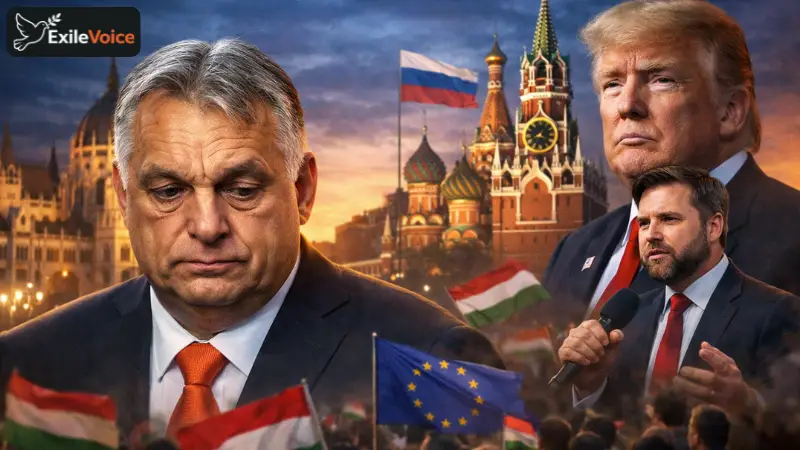
In a significant shift within European politics, Viktor Orbán, the long-standing Prime Minister of Hungary, has suffered a decisive electoral defeat after 16 years of continuous rule. Orbán, a prominent figure in the global populist movement and a staunch ally of President Donald Trump, was widely regarded as the most "pro-Putin" leader within the European Union. His departure marks the end of an era that redefined Hungary’s relationship with both its European neighbors and the Kremlin.
The electoral campaign was characterized by a palpable desire for change among the Hungarian populace. Despite strong endorsements from Trump, who utilized social media to signal his unwavering support and promised major developmental investments under a continued Orbán administration, the voters chose a different path. This result serves as a major setback for Trump’s network of international allies. Just before the election, U.S. Vice President J.D. Vance visited Budapest, a move many interpreted as a high-level attempt to bolster Orbán’s standing and showcase his close ties to the American conservative establishment.
The implications of Orbán’s loss extend beyond Hungary’s borders. For years, Hungary served as a contrarian voice within the EU, often blocking or delaying collective actions against Russia. With Orbán out of power, the European Union may find greater cohesion in its foreign policy toward the East. Furthermore, this defeat raises questions about the efficacy of Trump’s international endorsements. Whether Orbán fell due to "incumbency fatigue" after nearly two decades in power or if the association with Trump’s current global standing played a role remains a subject of intense debate among political analysts. The shift in Budapest signals a potential waning of the specific brand of illiberal democracy that Orbán championed and Trump praised.