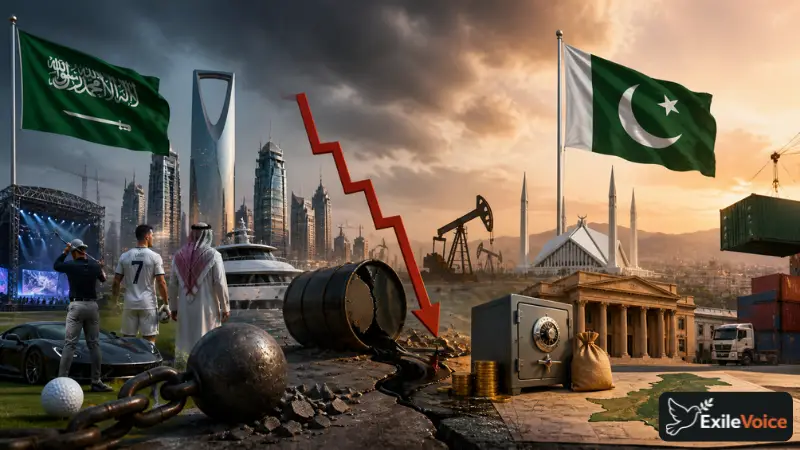
For years, the global image of Saudi Arabia has been synonymous with "Vision 2030", a multi-billion-dollar blueprint for a post-oil future characterized by hyper-modernization, structural development, and lavish spending on international sports and entertainment. However, recent economic data and strategic shifts suggest that the "big spending era" is facing a sharp correction. As the Kingdom grapples with mounting financial concerns and lower-than-expected oil revenues, the global community, and particularly regional partners like Pakistan, must brace for the consequences of a Saudi pull-back.
The hallmark of Crown Prince Mohammed bin Salman’s (MBS) strategy was the deployment of massive capital to shift global market trends. This included lucrative payments to lure top-tier politicians, celebrities, and athletes to the Kingdom. A prime example was the LIV Golf venture, which disrupted traditional sporting structures by offering unprecedented checks to the game's biggest names. Yet, reports indicate that even these high-profile projects are being scaled back or scrapped entirely. The financial reality is simple: the projected oil revenues required to fund these mega-projects have not materialized at the necessary scale, a situation exacerbated by regional instability and the ongoing conflict in the Middle East.
This economic pivot has direct and sobering implications for Pakistan. In September 2025, following a mutual defense pact, there was significant anticipation regarding Saudi "strategic investments" in Pakistan’s defense and industrial sectors. These commitments were sold to the public as a cornerstone of Pakistan’s economic recovery. However, it is now becoming increasingly clear that while Saudi Arabia may continue to provide liquidity support, such as maintaining deposits in the State Bank of Pakistan to stabilize reserves, the promised billions in "strategic investment" are unlikely to manifest. The Kingdom is prioritizing its internal fiscal health over external expansionist investments.
Furthermore, the competition for Saudi capital is intensifying. The rivalry between Saudi Arabia and the UAE for regional dominance has created a fractured economic landscape. As the UAE recently withdrew significant funds from Pakistan, the reliance on Saudi deposits grew. Yet, a nation cannot build a sustainable economy on the deposits of a neighbor who is currently tightening its own belt. The lesson for policymakers is clear: the era of relying on "brotherly nations" for massive capital infusions is ending. As Saudi Arabia focuses on curating its own economic survival amidst regional wars and fluctuating oil prices, partners like Pakistan must look toward internal structural reforms rather than external windfalls.