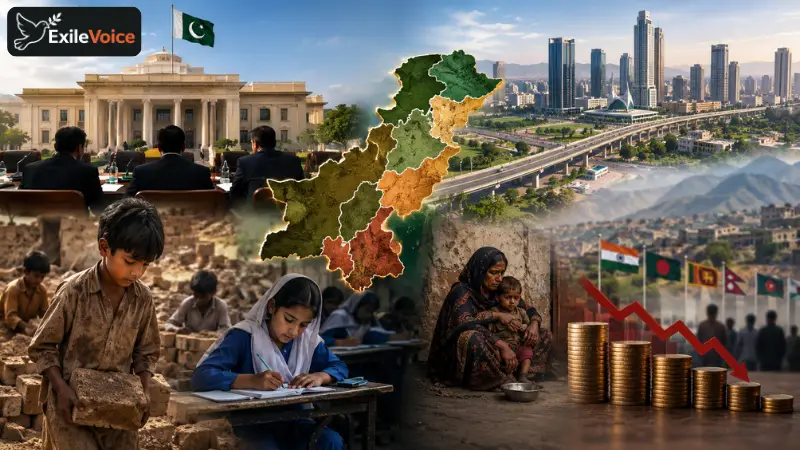
Pakistan's ongoing economic negotiations with the International Monetary Fund (IMF) have laid bare a stark divide between the ruling elite and the civilian population regarding fiscal responsibility. Finance Minister Muhammad Aurangzeb recently initiated direct consultative meetings with joint committees from the Pakistan Muslim League-Nawaz (PML-N) and the Pakistan Peoples Party (PPP) to address intensifying internal friction over the upcoming federal budget. Confronted by political stakeholders who publically criticized the proposed tax structures and expenditure cuts, the Finance Minister issued a definitive ultimatum: if the coalition partners found the current fiscal framework unacceptable, they were mandated to produce an alternative budget that could independently secure IMF validation. This confrontation underscores a governance model that is increasingly trapped between rigid international sovereign obligations and domestic political survival.
This budgetary tension coincides with the onset of what political analysts describe as the annual parliamentary bargaining season. Ahead of the mandatory legislative votes required to pass the federal budget, institutional behavior shifts visibly toward securing individual political loyalties. Official executive logs show a surge in private audiences between the Prime Minister and obscure backbench members of the National Assembly. These high-level meetings serve primarily as transactional forums. Rather than shaping macro-economic strategy, these interactions revolve around localized political patronage: the allocation of discretionary development funds, the authorization of regional infrastructure contracts, the fast-tracking of commercial No-Objection Certificates (NOCs) for personal businesses, and favorable administrative transfers. This patterns extends deep into provincial assemblies as well, with localized forward blocks threatening to withhold critical budgetary votes unless their financial and administrative terms are met by the executive branch.
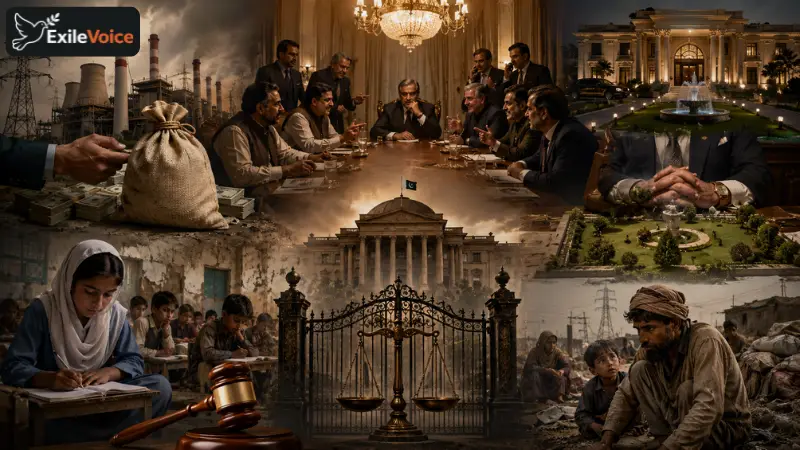
While regional legislators maximize their leverage for localized funding, the macro-economy remains suffocated by structural distortions within the energy sector, specifically the crisis of capacity payments to Independent Power Producers (IPPs). Decades of deeply flawed sovereign contracts, characterized by dollar-indexed returns and mandatory payment guarantees irrespective of actual electricity consumption, have created a system where the state must pay over 2,200 billion rupees annually to private power conglomerates. A substantial portion of these IPPs are owned by or interconnected with the country's dominant political dynasties and industrial elites, ensuring the preservation of these extractive contracts at the expense of public welfare.
The institutional protection of these elite financial arrangements was recently cemented within the judicial system. A formal public interest litigation petition was filed in the Lahore High Court seeking an immediate injunction against the continued collection of capacity payment surcharges from regular consumers, arguing that these massive financial exactions lacked legitimate parliamentary oversight and direct legislative authorization. However, the judiciary summarily dismissed the petition at the preliminary stage, ruling it legally non-maintainable. This swift judicial dismissal illustrates the deep-seated resistance within state institutions toward auditing or dismantling elite economic privileges, even when those privileges actively drive small businesses into bankruptcy and millions of citizens into extreme poverty.
Simultaneously, the administrative elite continues to exhibit systemic financial insulation from the economic realities confronting the rest of the nation. In a stark manifestation of bureaucratic entitlement, administrative records revealed that approximately 220 million rupees (22 crore) of public funds were officially authorized for the sole purpose of renovating and landscaping the private lawn of the Chief Secretary of Punjab. This expenditure occurred in a province where over fifteen million children remain entirely out of the formal schooling system due to underfunded infrastructure, and where public healthcare facilities suffer from a chronic shortage of basic medical supplies and operational equipment.
The deep disparity within the state apparatus is further highlighted by the structural treatment of public school educators. The provincial Ministry of Education recently oversaw an executive salary restructuring that elevated the monthly compensation of the provincial education minister from 100,000 rupees to nearly 1,000,000 rupees. Conversely, when questioned on the floor regarding the stagnant and illegal sub-minimum wage structures of temporary and community school teachers, many of whom receive a mere 15,000 rupees monthly, provincial authorities defended the exploitation by asserting that these low-cost educators were already delivering optimal academic results. This occurs despite the state's own statutory minimum wage laws, which mandate a baseline floor of 40,000 to 45,000 rupees. The systemic operational philosophy across the administrative landscape has increasingly become one of unbridled resource extraction, where public officials prioritize immediate personal enrichment under the structural assumption that the prevailing economic order is unsustainable.