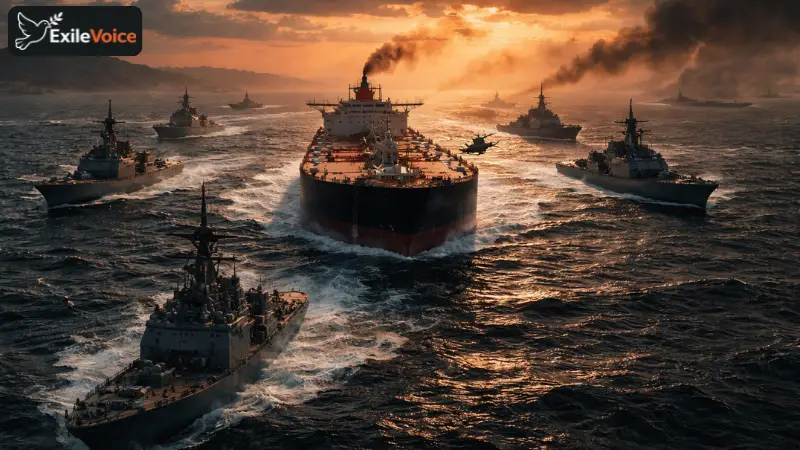
The geopolitical landscape of the Middle East has entered a volatile new phase as President Donald Trump initiates a naval blockade against Iran. Officially executed by the United States Central Command (CENTCOM), this maneuver targets the Gulf of Oman and the strategic Strait of Hormuz. While technically framed as a measure to intercept oil-related cargo, the scope of the operation reveals a comprehensive maritime siege designed to sever Iran’s access to the Arabian Sea. This strategy mirrors historic containment efforts seen in Cuba and Venezuela but carries far more explosive implications for 21st-century global trade.
Central to this escalation is the "blockade upon a blockade" doctrine. For decades, the U.S. Navy’s primary mission was to ensure the freedom of navigation in international waters. By shifting to a restrictive posture, the U.S. is now actively impeding the maritime trade routes used by major global economies, including India, China, Japan, and South Korea. This shift has drawn comparisons to the ancient Battle of Alesia, where Julius Caesar used concentric walls to starve his opponents into submission. In the modern context, Trump’s "wall of ships" seeks to force a surrender from Tehran by strangling its primary revenue stream: oil exports.
The immediate casualty of this policy is global energy stability. Prior to this blockade, the administration had selectively eased sanctions on Iranian and Russian oil to maintain a supply cushion in the international market, keeping prices below the $120 per barrel threshold. By reversing this stance, the U.S. risks triggering a massive spike in Brent Crude prices. Organizations like TankerTrackers have already noted the disruption; for instance, a National Iranian Tanker Company super-tanker recently delivered two million barrels of oil to India just hours before the blockade announcement. With subsequent shipments now stuck, energy-dependent nations in Asia face an imminent supply crisis.
Furthermore, the effectiveness of such a blockade is under scrutiny. Unlike island nations, Iran possesses porous land borders and maintains strong connections with neighbors like Afghanistan, Pakistan, and the Central Asian states under Russian influence. Analysts suggest that the Islamic Revolutionary Guard Corps (IRGC) may respond not with a direct naval confrontation against U.S. destroyers, but by ensuring that if Iran cannot export oil, no other Gulf nation can either. This "total shutdown" scenario in the Strait of Hormuz remains the ultimate threat to the global economy.