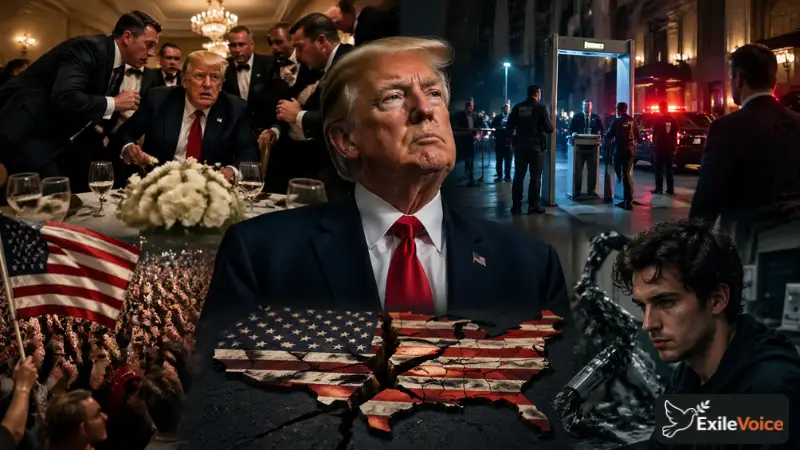
The recent assassination attempt on Donald Trump at the Washington Hilton during the White House Correspondents' Dinner has sent shockwaves through the American political system, further exposing the deep-seated polarization of the nation. The suspect, identified as Cole Thomas Allen, a 31-year-old Caltech graduate and former NASA researcher, represents a disturbing departure from the typical profile of a political extremist. His background as an elite-educated mechanical engineer and software developer highlights a growing trend of radicalization within the most privileged sectors of society.
This latest attack, the third on Trump in recent years, has reignited intense debates over gun control, security vulnerabilities, and the rise of political violence. Investigators believe the target was the administration's top officials, including Vice President JD Vance and Secretary of State Marco Rubio, both of whom were present at the event. The security failure at the Washington Hilton, where a single metal detector was reportedly the only barrier to entry, has led to a rigorous re-evaluation of the Secret Service’s protective protocols. The immediate reaction of the security teams, separating the President and Vice President to ensure the continuity of government, demonstrates the high-stakes nature of modern executive protection.
Beyond the immediate security implications, the attack reflects a broader cultural crisis in America. Analysts point to a "toxic masculinity" narrative promoted by the MAGA movement, which some believe has backfired by radicalizing the very demographic it sought to empower. The shooter’s profile, a successful "lone wolf" who had previously donated to rival political campaigns, suggests a complex set of motives that transcend simple partisan lines. In the aftermath, the public reaction has been as divided as the political climate itself. In a healthy democracy, an attack on a leader is met with universal condemnation; however, the current American landscape, much like that of Pakistan, sees significant segments of the population reacting with indifference or even celebration, underscoring a total collapse of civic civility.
Donald Trump’s own reaction to the event has been characteristically defiant. In a post-attack press conference, he leaned into his personal brand of "machismo," comparing himself to historical figures like Abraham Lincoln and using the moment to push his personal and political agendas, including controversial multi-billion dollar construction projects at the White House. This blend of political theater and personal branding continues to define his leadership style, even in the face of life-threatening violence. As the legal and security investigations continue, the underlying issue remains the profound fragmentation of the American psyche, where violence has become an increasingly frequent tool of political expression.