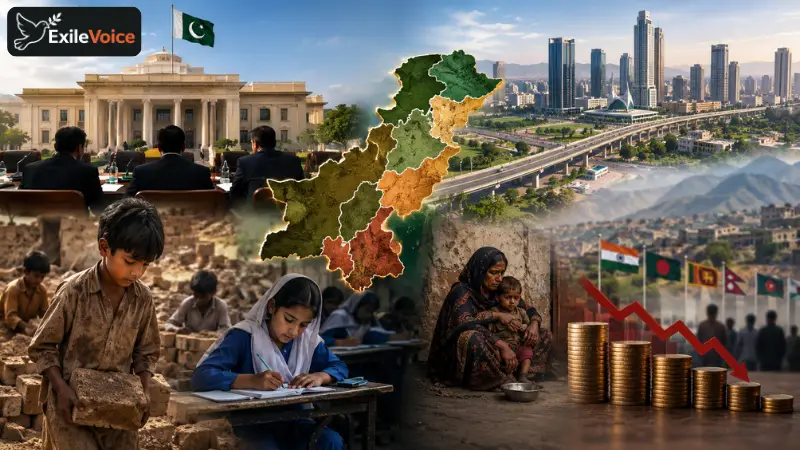
Pakistan’s economic landscape in 2026 is defined by a persistent struggle to balance fiscal requirements with the growing burden on its populace. Central to this issue is the concept of "tax governance," or what some critics describe as "tax terrorism," where the focus remains heavily on extracting revenue from easily targetable sectors rather than expanding the tax net in a sustainable, equitable manner.
The structural challenge is deep-rooted. Pakistan consistently operates with a tax-to-GDP ratio that lags significantly behind its regional counterparts. While neighboring economies and broader Asia-Pacific benchmarks often reach tax-to-GDP ratios near 20%, Pakistan has hovered closer to 11–12%. This discrepancy is not merely a failure of tax collection mechanisms but an indicator of "elite capture." The agricultural, real estate, and large-scale retail sectors often benefit from legislative loopholes that protect significant wealth from taxation, shifting the burden onto the salaried middle class and small business owners who are easier to monitor via bank-linked documentation.
The 2026 Finance Bill represents a government attempt to address these structural imbalances, proposing revised tax slabs and efforts to digitize the economy. Yet, the efficacy of these measures is viewed with skepticism by observers. Professional insights suggest that without a fundamental shift in service delivery, where citizens see a tangible return on their tax payments through security, infrastructure, and public services, the social contract between the state and its people remains fractured. The core economic critique is that administrative actions, while necessary, do not substitute for a comprehensive political and economic strategy that prioritizes transparency and reduces the reliance on indirect taxes, which disproportionately affect low-income earners.