

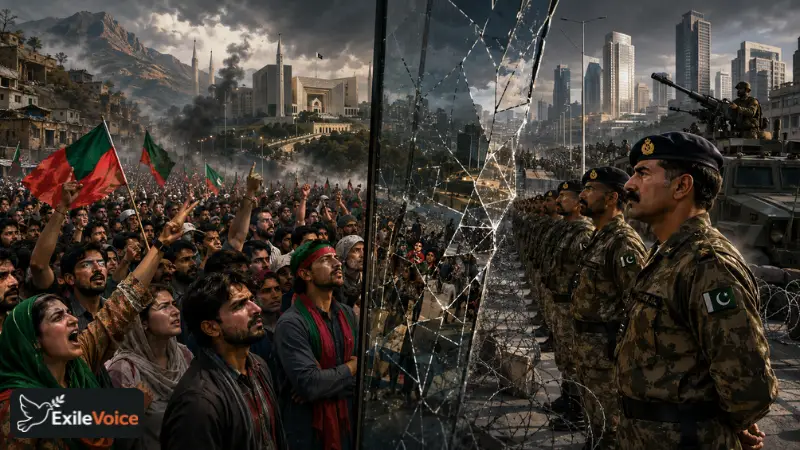
In the complex geopolitical landscape of South Asia, Pakistan stands as a nation perpetually at a crossroads between its democratic aspirations and its entrenched security apparatus. Recent events, particularly surrounding the commemorations of military achievements and the somber anniversary of May 9, have brought to the forefront a critical question: who do Pakistanis truly believe? This polarization is not merely a political disagreement; it represents a fundamental fracture in the national psyche, pitting the narrative of the country’s most popular political force, the Pakistan Tehreek-e-Insaaf (PTI), against the storied institution of the Pakistan Army.
The dichotomy is striking. On one hand, the military celebrates "Marka-e-Haq," commemorating successful defense operations and diplomatic maneuvers against regional rivals. These achievements are meant to evoke national pride and demonstrate the military's role as the "protector" of the state. However, the professional luster of these victories is increasingly tarnished by domestic political interference. As noted by seasoned journalists, while the army can stare down a five-times larger external enemy, its internal reputation is suffering under allegations of vote-tampering, judicial pressure, and the systematic suppression of political dissent.
The May 9 incidents serve as the ultimate flashpoint for this trust deficit. While the state portrays the events as a "dark day" of organized violence against national symbols, the PTI narrative frames it as a "false flag" or a reaction to the unprecedented victimization of its leadership. This clash of realities is further exacerbated by the treatment of Imran Khan, who remains incarcerated while his supporters view his imprisonment as a sacrifice for "Haqeeqi Azadi" (True Freedom). The refusal of the PTI leadership to back down, despite mounting legal and physical pressure, has created a cult of resilience that challenges the military’s traditional hegemony over the national narrative.
Furthermore, the economic and social disparities within Pakistan deepen this rift. The perception that the state serves only the "Elite of the Garrison", concentrated in the upscale sectors of Lahore, Islamabad, and Rawalpindi, while ignoring the peripheral regions like Balochistan, Gilgit-Baltistan, and interior Sindh, fuels a sense of alienation. When the military’s spokesperson claims they are a "force of the poor," social media is immediately flooded with images of that same force enforcing crackdowns on common citizens. This real-time fact-checking by a digitally empowered populace has rendered traditional propaganda ineffective.
To bridge this gap, Pakistan requires a genuine return to constitutionalism where the military's role is strictly confined to external defense and the civilian mandate is respected without caveats. Until the "gatekeepers" of the state acknowledge that their credibility is tied to the transparency of the electoral process rather than the caliber of their weaponry, the trust deficit will continue to widen, potentially leading to long-term national instability.

