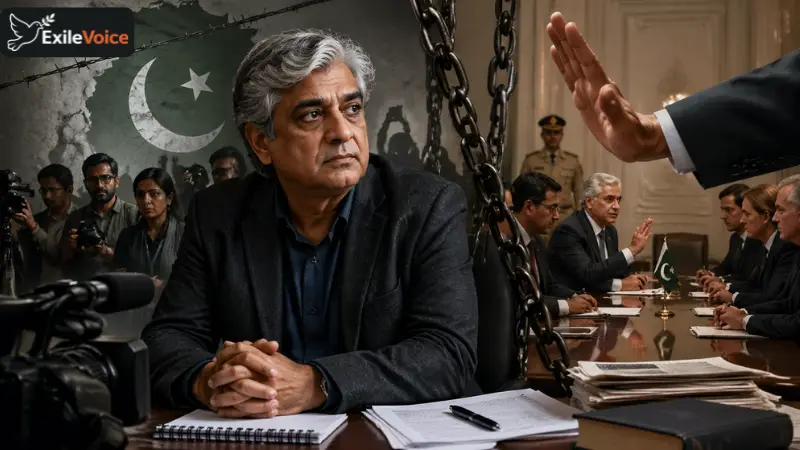
The landscape of journalism in Pakistan has long been a battlefield between state narratives and independent reporting. Recent events surrounding the dismissal of veteran journalist Matiullah Jan from Neo TV highlight a deepening crisis in media freedom. Jan’s exit followed a seminar at the Islamabad Press Club, where he hosted international journalists visiting to cover regional diplomacy. During the event, Jan spoke candidly about human rights violations and the incarceration of fellow journalists, a move that reportedly drew the ire of state authorities.
This incident is not merely an isolated employment dispute; it signifies a systemic push to control the information flow reaching the international community. When journalists are penalized for providing a ground-level perspective to foreign counterparts, the message is clear: only the official version of reality is permissible. The professional fallout for Jan, who has faced similar challenges throughout his career, underscores the personal and financial risks inherent in principled journalism within the region.
Furthermore, the "filtered" approach to diplomacy is extending beyond the press. Reports suggest that Vice Prime Minister Ishaq Dar has issued directives to cabinet members, restricting their interactions with foreign diplomats and international events without explicit Foreign Office clearance. This move aims to centralize the state’s messaging, particularly concerning sensitive topics like Iran-U.S. relations. By limiting the exposure of ministers to diplomatic circles, the administration seeks to present a unified, albeit highly curated, front.
The irony remains that in an age of digital connectivity, such attempts at information containment often backfire. International journalists who witnessed the pressure on Jan are likely to report on these very restrictions, potentially damaging the country’s global image more than the original criticisms ever could. The intersection of media suppression and diplomatic isolationism suggests a challenging road ahead for democratic discourse in Pakistan.