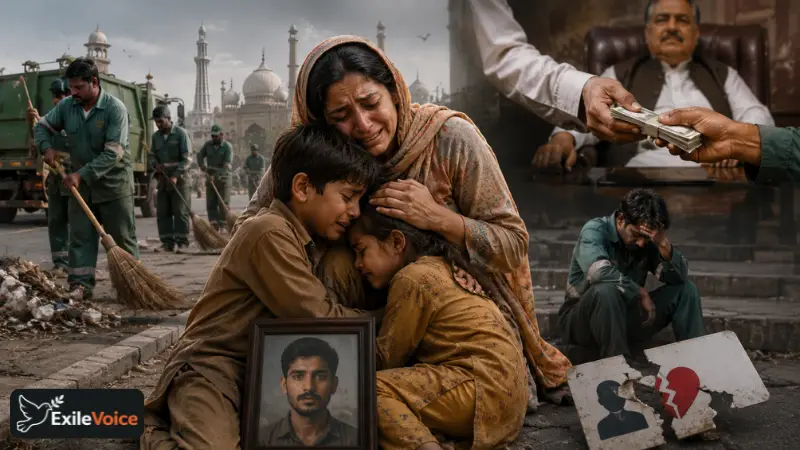
The "Suthra Punjab" initiative, aimed at cleaning up Lahore, has come under intense scrutiny following the tragic suicide of a young man named Zeeshan. The incident serves as a stark reminder of the human cost often hidden behind ambitious government projects. Zeeshan, a worker under the initiative, reportedly took his own life after being dismissed for daring to speak out against the corruption surrounding his meager wages.
According to reports, contractors, who are allegedly linked to political figures, were withholding the majority of the government-allocated pay, leaving workers with only a fraction of their promised salary. When Zeeshan raised the issue in a public forum, his reward was not justice, but the loss of his livelihood. Despite his desperate attempts to apologize and regain his job to support his family, his pleas were ignored.
This situation reflects a broader pattern of economic exploitation where the burden of "cleanliness" or "affordability" is placed squarely on the shoulders of the poor. Whether it is the price of bread or the maintenance of public spaces, the policy approach appears to favor optics over the welfare of those actually performing the labor. The removal of access to health cards further compounds these hardships, leaving vulnerable populations without a safety net during crises.