

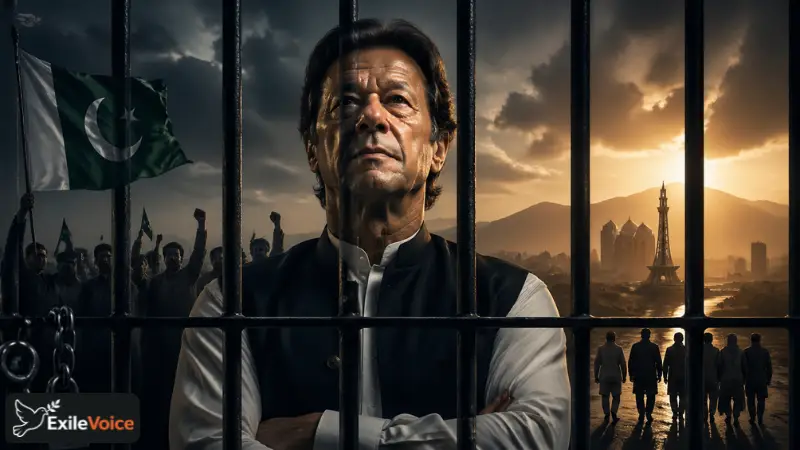
As Imran Khan approaches nearly 1,000 days of political struggle and incarceration, the discourse surrounding his "sacrifice" has taken a somber turn. The former Prime Minister of Pakistan, once a global superstar and cricket icon, now stands as a symbol of principled defiance, but at a staggering personal cost. Khan’s decision to "take one for the team," as observers often describe it, has not only resulted in his own imprisonment but has also drawn his family, including his wife Bushra Bibi and his sisters, into a grueling legal and social battle.
The central question facing Pakistani society today is: for whom is this sacrifice being made? Despite the immense popularity Khan enjoys on digital platforms and the tireless efforts of his "social media warriors," there is a noticeable gap between online engagement and street-level mobilization. While thousands were originally arrested in the wake of his removal, the number of core leaders and supporters willing to face the current system's wrath has dwindled to a dedicated but relatively small group. This disparity raises a painful critique of the Pakistani middle class and the broader populace, many of whom appear to have "moved on" or are too preoccupied with daily economic survival to challenge the status quo.
The systemic crackdown is exemplified by the disappearance of individuals like the young man from South Africa who was reportedly arrested simply for holding a poster in support of Khan outside Adiala Jail. Such incidents serve as a deterrent, fostering a climate of fear that keeps the "average" citizen away from the front lines of political reform. Furthermore, the role of former allies and constitutional heads, such as former President Arif Alvi, is being scrutinized by history. Critics argue that during crucial moments when the presidency could have been a bulwark against extra-constitutional measures, the response was often muted or ineffective, leaving Khan and his core circle isolated.
The "sacrifice" is thus not just about political power but about the survival of a specific set of principles, the rule of law, morality (akhlaqiyat), and national sovereignty. As the establishment continues to consolidate control, the narrative of Imran Khan’s struggle becomes a mirror reflecting the state of the Pakistani nation. Is the country willing to uphold the principles its leaders claim to fight for, or will the sacrifice of a few be forgotten in the pursuit of individual comfort and safety? The answer to this will define the legacy of this era and determines whether Pakistan can ever truly transition to a functioning democracy.

