

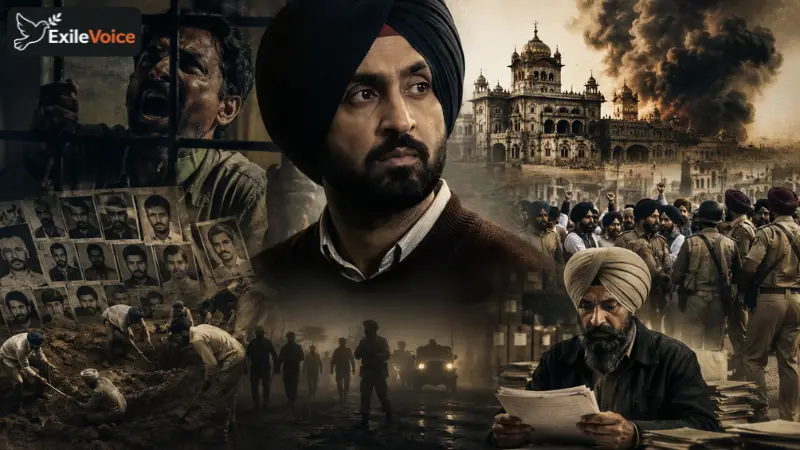
The recent discourse surrounding the film Satluj, starring prominent Punjabi singer and actor Diljit Dosanjh, has reignited debates regarding historical truth, state censorship, and the representation of the Sikh community in India. Originally titled Punjab 95 and later subjected to multiple name changes and extensive cuts, Satluj has faced significant obstacles to its release. The film centers on the turbulent period in India between 1980 and 1995, specifically highlighting the systemic persecution of Sikhs, the Khalistan movement, the aftermath of the Golden Temple operation, and the subsequent anti-Sikh riots in Delhi.
At the core of the narrative is the story of Jaswant Singh Khalra, a social activist who sought to document the disappearances and extrajudicial killings of Sikh youths by Indian security forces. Khalra’s efforts to compile data on those who were "disappeared," killed, and buried in mass graves made him a target of the state. He was eventually abducted by the Punjab Police in 1995 and murdered.
The film's journey through the Indian censor board, which reportedly demanded over 120 cuts, highlights the ongoing tension between artistic freedom and state-sanctioned historical narratives. Despite being a highly anticipated project featuring a global superstar, its limited digital release on platforms like Zee5 was quickly thwarted by government intervention. The suppression of Satluj is viewed by many as a deliberate attempt to bury uncomfortable truths about human rights violations. This situation mirrors concerns regarding the control of information and the suppression of dissent, reinforcing the necessity of supporting artistic endeavors that bring historical realities to the forefront.

