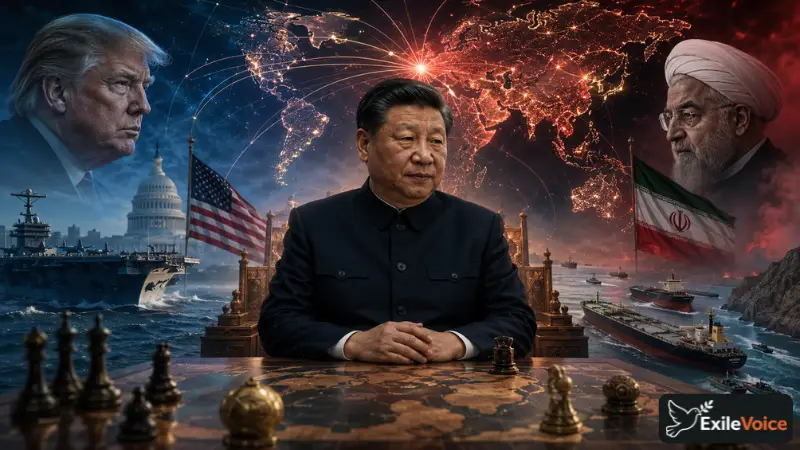
The global geopolitical landscape is witnessing a seismic shift as the center of gravity for Middle Eastern diplomacy moves toward Beijing. As the conflict between the United States and Iran reaches a critical juncture, analysts are increasingly looking to Chinese President Xi Jinping to act as the ultimate arbiter. The failure of Western-led mediation efforts has created a power vacuum that China appears eager to fill, effectively positioning President Xi as a new global "Emperor" in the eyes of some strategic observers.
The current impasse is defined by a deep-seated distrust between Washington and Tehran. While Donald Trump has utilized unconventional diplomatic channels, including facilitators in Islamabad, many experts suggest these peace talks may have been a strategic trap designed to buy time for Zionist-influenced interests that oppose a permanent deal with Iran. Despite these skepticism-fueled reports, the necessity for a resolution remains urgent. Trump’s naval blockade of Iran has failed to secure the immediate deal he requires, primarily because Iran interprets the blockade as an act of aggression rather than a precursor to a ceasefire.
The strategic stakes are further complicated by Israel’s posture. Defense Minister Israel Katz has signaled a readiness to resume hostilities, potentially through surgical strikes against the Islamic Revolutionary Guard Corps (IRGC) leadership. Such a scenario would likely serve as political cover for Trump to re-enter negotiations from a position of perceived strength. However, Iran's tactical resilience, demonstrated by its administrative control over the Strait of Hormuz and the seizure of foreign tankers—indicates that it is building a regional consensus to counter Western pressure. As the U.S. struggles with internal contradictions and external military overstretch, the "China option" emerges not just as a possibility, but as a potential inevitability in the quest for regional stability.