

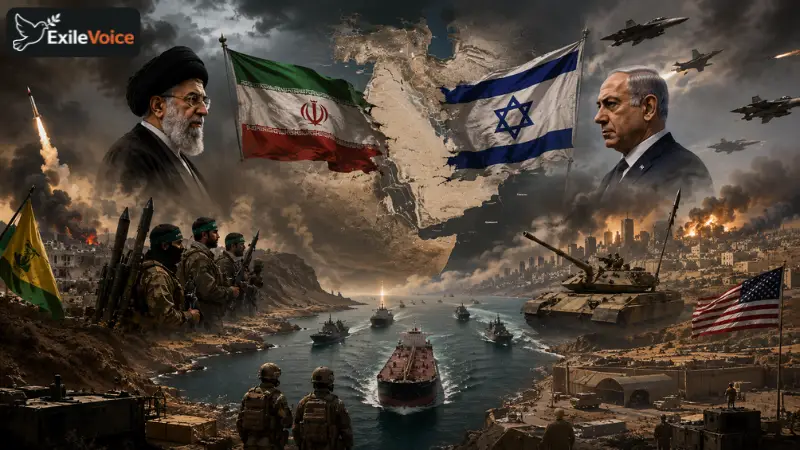
The geopolitical landscape of the Middle East is currently witnessing a volatile shift as tensions between Iran and Western powers, primarily the United States and Israel, escalate to dangerous new heights. What began as a complex series of diplomatic negotiations has rapidly devolved into a situation that analysts are increasingly describing as a potential precursor to a broader regional conflict, often referred to as "Iran War 2.0."
The core of this crisis lies in the breakdown of communication channels between Tehran and Washington. Despite initial efforts to negotiate terms regarding Iran's nuclear program and regional influence, the atmosphere has soured significantly. Reports from major news outlets indicate that negotiations have effectively stalled, replaced by aggressive posturing and direct confrontation.
A critical turning point in this escalation has been the role of Iran's proxies, specifically Hezbollah in Lebanon. While the primary friction points have historically been within Iranian borders or the Persian Gulf, the conflict has increasingly shifted toward Lebanon, where the density of Iran-aligned forces has created a "war within a war." This geographic proximity to Israel, combined with Hezbollah’s formidable military capacity, has placed immense pressure on the administration of Benjamin Netanyahu. Furthermore, the divide between U.S. and Israeli strategic priorities has widened; while the U.S. appears interested in an "off-ramp" to stabilize regional trade, particularly in the Strait of Hormuz, Israeli leadership is grappling with intense internal and external pressures, including the ongoing security situation on their northern border.
The situation was further compounded by recent allegations of direct confrontations, with Iran reportedly claiming strikes on U.S. regional bases in Kuwait and Bahrain, while U.S. Central Command (CENTCOM) characterizes these actions as "aggressive behavior." This careful choice of language, avoiding the formal declaration of "war", highlights the precarious nature of the current stand-off. With regional players like Oman caught in the middle of diplomatic threats and the potential for wider military engagement, the international community remains on high alert. The integration of three distinct issues, the nuclear program, the security of the Strait of Hormuz, and the conflict in Lebanon, into a single negotiating package by Tehran has fundamentally altered the strategic calculus, making a peaceful resolution significantly more difficult to achieve in the immediate term.

