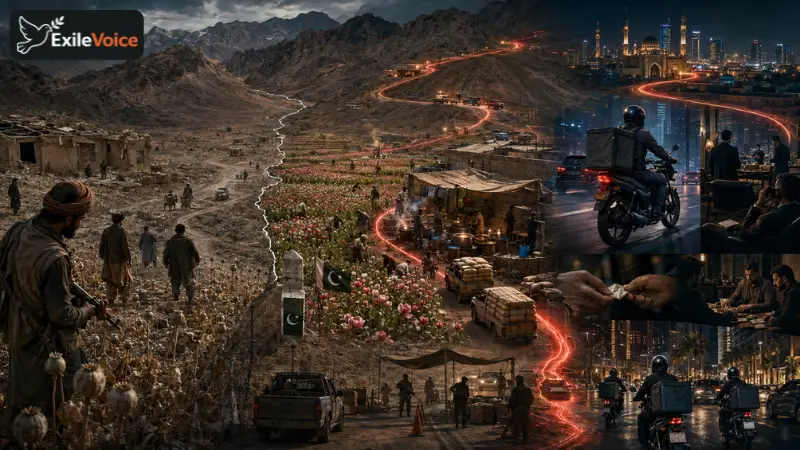
A major shift is occurring in the regional narcotics trade along the geopolitical axis connecting Afghanistan and Pakistan. According to investigative reports and international monitoring data from the United Nations Office on Drugs and Crime (UNODC), the domestic landscape of illicit crop cultivation and processing has transformed dramatically. This shift follows strict policy mandates issued by the Taliban administration within Afghanistan, which successfully banned the cultivation of illicit poppy crops across traditional strongholds like Helmand and Kandahar.
However, rather than eliminating the regional trade, this enforcement has displaced production across the border into Pakistan's Balochistan province. UNODC data reveals a striking escalation: in 2020, registered illicit cultivation in monitored border zones was limited to approximately 27 hectares. By 2023, this figure surged to over 380 hectares, marking an unprecedented multi-hundred percent expansion. This exponential growth has transformed regional borderlands into active hubs for processing and distribution, feeding into a domestic illicit drug market estimated to exceed two billion dollars annually.
This rapid expansion points to systemic vulnerabilities within the primary agencies responsible for border security and narcotics interdiction. The Anti-Narcotics Force (ANF), a specialized federal agency led by senior military officials, faces growing scrutiny regarding its enforcement efficacy. Historical precedents demonstrate that the agency has often been entangled in political dynamics, with high-profile drug cases frequently intersecting with shifts in federal governance. The long-term legal battles of political figures like Hanif Abbasi and Rana Sanaullah illustrate how narcotics indictments are often tightly intertwined with broader shifts in political power.
A clear example of these enforcement gaps is the recent case of Anmol, a 31-year-old operative known in criminal networks as "Pinky." Originating from a modest background in Karachi, she built a highly sophisticated, multi-provincial illicit drug distribution network linking Lahore and Karachi. Despite an official criminal case being registered against her by the ANF as early as 2019, she operated openly within major urban centers for years.
Leaked communications and investigative files reveal that her network utilized modern logistics networks, deploying couriers disguised as commercial food delivery riders to distribute high-purity illicit substances directly to affluent urban demographics. Chemical analysis from ongoing inquiries indicates her network possessed advanced processing formulas capable of cutting and multiplying base imports significantly, generating immense profit margins. The fact that such an extensive operation continued to expand for nearly five years despite active institutional cases raises serious questions about systemic corruption and complicity within regional law enforcement frameworks.