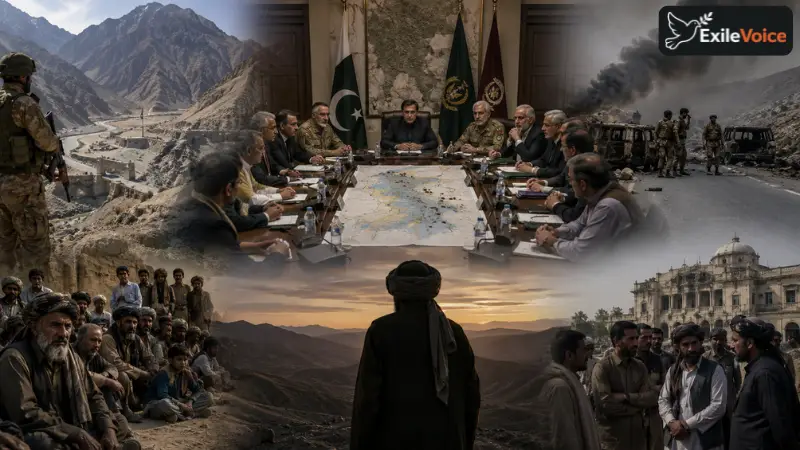
Balochistan, the largest province in Pakistan, is currently grappling with a severe security and governance crisis that threatens to destabilize the entire region. Recent events, including the loss of dozens of security personnel and civilians, have brought into sharp focus the glaring disconnect between the political administration and the realities on the ground. Despite the frequent convening of "Apex Committees", high-level meetings involving top government officials, military leadership, and provincial administrators, there has been a consistent failure to address the root causes of the unrest.
The analysis reveals that these Apex Committees have become performative rather than productive. Since 2024, numerous sessions have been held in Quetta, yet the security situation has only deteriorated, with Pakistan facing increasing challenges related to internal security and militancy. The failure to curb these threats is not due to a lack of communication among the elite, but rather a fundamental flaw in the governance model being applied to the province.
A critical point of failure lies in the bureaucratic and administrative appointments. The individuals tasked with governing Balochistan often lack a deep connection to the province's linguistic, cultural, and socio-political landscape. The deployment of bureaucrats from Punjab to hold key positions in Balochistan, such as secretaries of interior and planning, is reminiscent of colonial-era management styles. These officials, while potentially qualified in a general sense, are perceived as outsiders who do not speak the local languages (Balochi, Pashto, Brahui, or Hazaragi) and fail to understand the intricate tribal and social dynamics that govern daily life in the region.
General Syed Asim Munir, in a previous parliamentary briefing, emphasized the urgent need for "better governance" as a prerequisite for national stability. However, the current lineup of leadership, ranging from the Chief Minister to key administrative secretaries, reflects a top-down, imposed structure that lacks local legitimacy and public trust. When the administration is viewed as an extension of external interests rather than a representative of the local population, the resulting governance deficit creates a vacuum that is increasingly filled by instability.
The repetitive cycle of high-level meetings, followed by tragic security incidents, suggests that the state's current strategy is insufficient. True stability in Balochistan requires a shift from superficial bureaucratic maneuvers to a genuine engagement with local stakeholders, respect for regional autonomy, and the appointment of administrators who are deeply rooted in the soil of the province. Without a fundamental restructuring of how Balochistan is governed, the current trajectory of instability appears difficult to reverse.