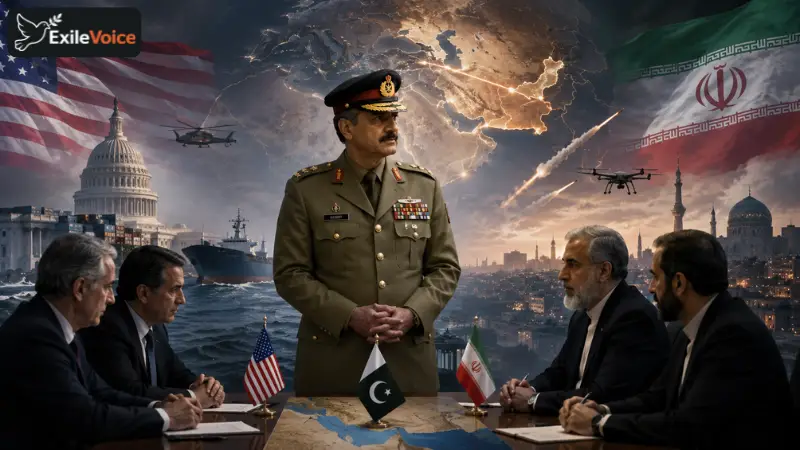
In an extraordinary turn of backchannel diplomacy, Pakistan’s Chief of Army Staff, General Asim Munir, has emerged as the primary conduit between the United States and the Islamic Republic of Iran. Operating during a critical window of regional escalation, the Pakistani military leadership orchestrated a high-stakes, 24-hour diplomatic sprint in Tehran. This mission aimed to deliver a highly structured framework for a phased de-escalation, striking a balance between Washington's demands for maritime safety and nuclear non-proliferation, and Tehran's demands for economic relief and sovereignty.
The backdrop to this quiet diplomacy is a region on the brink. The Strait of Hormuz, a global choke point through which a significant portion of the world's petroleum flows, has faced unprecedented disruption. Maritime blockades, retaliatory drone warfare, and infrastructure targeting have paralyzed standard trading routes, prompting urgent intervention. Amid this volatility, General Munir's team arrived in Tehran accompanied by a robust technical and legal delegation. This composition indicates that discussions have advanced past vague diplomatic pleasantries and into the rigorous wording of formal international frameworks.
According to emerging intelligence and regional diplomatic reports, the Iranian framework presented to the Pakistani delegation is structured around a sequence of clear priorities. Tehran's core strategy relies on a multi-track timeline, summarized by the strategic maxim: peace first, payment second, and nuclear negotiations third.
Track one centers on immediate conflict cessation and maritime normalization. Iran has signaled a willingness to restore traffic stability through the Strait of Hormuz, potentially waiving transit tariffs or establishing a comprehensive, joint maritime governance regime. However, this concession remains strictly contingent upon the lifting of the economic blockades targeting Iranian ports. Furthermore, Tehran has raised a significant point regarding compensation. The Iranian leadership demands formal financial reparations from international actors to rebuild factories, schools, and medical facilities damaged during recent regional kinetic engagements.
The secondary phase moves into the economic sphere, focusing heavily on billions of dollars in frozen Iranian assets held globally due to decades-old sanction regimes. The message transmitted via the Pakistani backchannel is clear: without the verified release of these assets, wider diplomatic progress remains halted.
Only after these stabilization and economic milestones are cleared will Tehran open track two: the nuclear portfolio. On this front, the terms brought back by General Munir outline a conditional 10-year freeze on high-level uranium enrichment, pledging to keep enrichment levels capped at the standard 3.6% threshold. Uranium already enriched beyond the 20% mark would remain contained within Iranian borders under strict international monitoring. Critically, this entire nuclear compromise rests on a fundamental demand: the formal international recognition of Iran’s inherent right to limited peaceful enrichment, backed by comprehensive sanctions relief.
While the diplomatic machinery works toward this text, the internal dynamics in Tehran reveal deep complexities. While the foreign ministry hints that a 60-day ceasefire deal is close, the Islamic Revolutionary Guard Corps (IRGC) maintains a cautious, defensive stance. Elements within the IRGC have signaled through regional media that their forces remain fully prepared for wide-ranging offensive operations if the negotiations stall. They warn that any perceived diplomatic bad faith could expand the theater of conflict past the Persian Gulf and into the strategic chokepoint of Bab al-Mandeb off the coast of Yemen, threatening alternate Western energy pipelines.
Pakistan's leadership of this sensitive backchannel underlines its unique strategic position, as it remains one of the few global actors capable of engaging directly with Washington, Beijing, and Tehran. However, this external diplomatic role contrasts sharply with growing domestic security vulnerabilities within Pakistan's own borders, creating a stark divergence between international prestige and internal stability.