

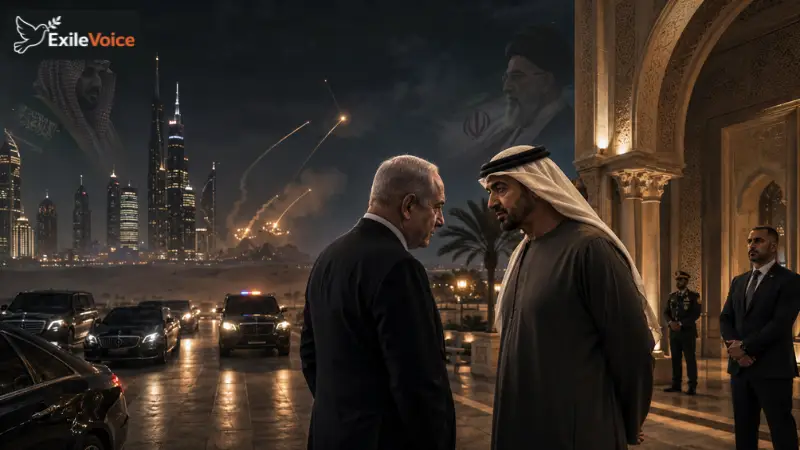
The delicate geopolitical architecture of the Middle East has faced a seismic tremor following the official confirmation from the Israeli Prime Minister’s Office regarding a high-stakes clandestine mission. On March 26, 2026, Prime Minister Benjamin Netanyahu conducted a secret visit to Abu Dhabi, meeting with UAE President Mohamed bin Zayed Al Nahyan (MBZ) at Al Ain, a traditional stronghold of the ruling family. This revelation, accompanied by news of multiple secret visits by Mossad Chief David Barnea, signals a desperate attempt by Israel to salvage the Abraham Accords amidst growing regional instability and a cooling of relations with Saudi Arabia.
Analysis of the Zionist strategic mindset suggests that Israel’s survival has historically depended on creating an enabling environment through calculated risks and secret alliances. From the early visions of Theodor Herzl to the Balfour Declaration, the movement has excelled at forcing the hand of global powers. In the current context, Netanyahu is attempting a similar maneuver. By leaking these secret meetings, Israel is essentially trapping the UAE in a public commitment, despite the Emirati Foreign Ministry’s formal denials and assertions that their diplomacy remains transparent and public.
The primary driver behind this renewed secret diplomacy is the hardening stance of Saudi Arabia. Crown Prince Mohammed bin Salman (MBS) has increasingly distanced the Kingdom from the normalization process, citing internal political pressures and the inability to "sell" the deal to a domestic audience while regional tensions remain high. The Israeli Prime Minister’s Office, frustrated by this Saudi retreat, is shifting focus toward cementing the UAE as a reliable, long-term security partner.
Strategic insights indicate that the "security-first" narrative is being used as the primary leverage. Israel has reportedly provided the UAE with Iron Dome batteries and active air force support to intercept potential Iranian missile threats. The message to the GCC states is clear: Israel is the only loyal partner capable of defending dynastic rule against the revolutionary fervor of Iran. This creates a fragmentation within the GCC, where states like Kuwait, Qatar, and Oman watch nervously as the UAE and Israel deepen a military bond that bypasses traditional pan-Arab consensus.
Ultimately, this disclosure serves a dual purpose. It validates Israel's status as a regional security guarantor while simultaneously pressuring Arab monarchies to choose sides in the brewing conflict with Iran. However, the embarrassment caused to the UAE government by this public confirmation highlights the inherent fragility of these alliances. As the Abraham Accords face their most significant trial, the shadow of Saudi Arabia’s silence looms large over the future of Middle Eastern normalization.

