

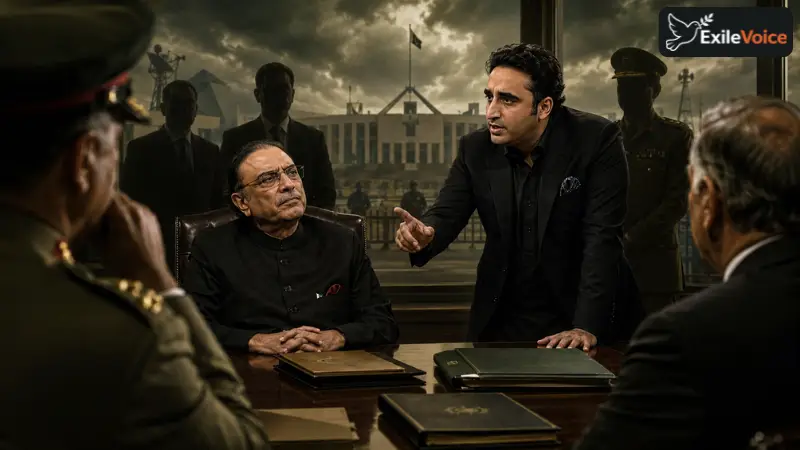
Pakistan’s political landscape is currently dominated by a singular legislative goal: the 28th Constitutional Amendment. However, the path to its passage is blocked by internal friction within the Pakistan People’s Party (PPP). Reports indicate that President Asif Ali Zardari is under immense pressure to resign or facilitate the amendment, which many believe is designed to solidify establishment control over the civilian government.
In response, the Zardari family appears to be employing a classic "Good Cop, Bad Cop" routine. While the President remains the face of negotiations, Chairman Bilawal Bhutto Zardari has taken a harder line, publicly stating that no amendment will be supported without his explicit permission. This strategy serves two purposes: it shields the elder Zardari from direct establishment ire and creates a bargaining chip for the party to demand concessions in other areas, such as the National Finance Commission (NFC) award.
The tension was palpable in recent press interactions where Bilawal exhibited significant stress, even rebuking his own party members like Shazia Marri for interjecting during sensitive questions. This internal pressure reflects the broader national crisis: a government struggling to manage record-breaking inflation while simultaneously fighting a silent war for constitutional supremacy. Whether the PPP can maintain this resistance or will eventually succumb to the mounting legal and political "files" being opened against them remains the most critical question in Islamabad today.

