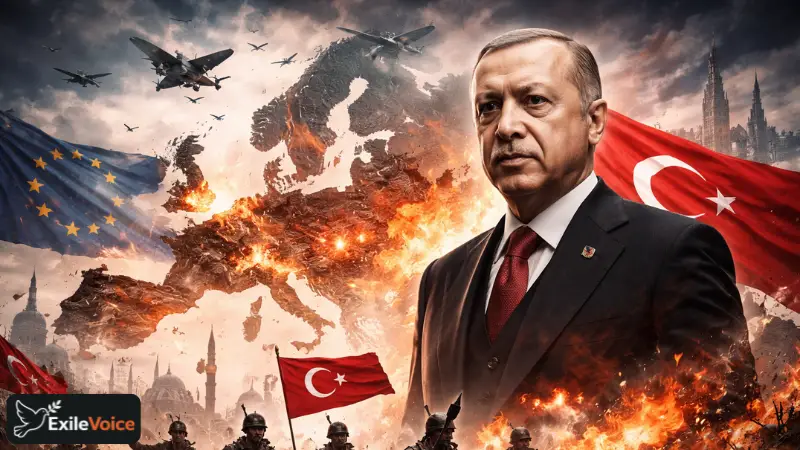
For decades, Turkey has occupied a unique position as a bridge between the East and the West, a NATO member that consistently sought integration into the European Union. However, a troubling new narrative is emerging within certain Western and Zionist intellectual circles that seeks to reframe Turkey not as a partner, but as an "existential threat" to European security. This shift in perception, recently highlighted by prominent figures like former Israeli Prime Minister Naftali Bennett, suggests that Turkey under President Erdoğan is being viewed as the next major challenge for the West after Iran.
The crux of this argument rests on the idea of "Sunni Supremacy." Critics argue that Turkey’s move toward a more independent, moderate Islamic leadership role in the Muslim world, shifting away from the purely secular, "begging bowl" diplomacy of the 20th century, is a precursor to regional hegemony. This narrative ignores the historical reality that Turkey has remained largely neutral in major global conflicts since the fall of the Ottoman Empire and has maintained deep, mutually beneficial trading relationships with Europe.
The danger of this rhetoric lies in its potential to become a self-fulfilling prophecy. Just as the book Going to Tehran by Flint and Hillary Leverett warned that a "toxic narrative" and lack of genuine understanding would make a US-Iran war inevitable, a similar "myth-making" process is now being applied to Ankara. By labeling Turkey a "rogue" or "irrational" actor, hawks in Washington and Tel Aviv are laying the groundwork for a policy of containment or confrontation.
During the recent Antalya Democracy Forum, representatives from 150 countries discussed the challenge of dealing with an increasingly unpredictable and coercive United States. The sentiment among middle powers is one of deep concern; they see a "Rule of Power" replacing the "Rule of Law." An acting US official’s recent comment that "only naked projection of power" works in West Asia underscores a disregard for democratic aspirations in the region, favoring "benevolent monarchies" instead. As Turkey continues to assert its strategic autonomy, the West’s refusal to accept a multipolar reality may push one of its most critical allies into a permanent state of opposition, fundamentally destabilizing the Mediterranean and Central Asian corridors.