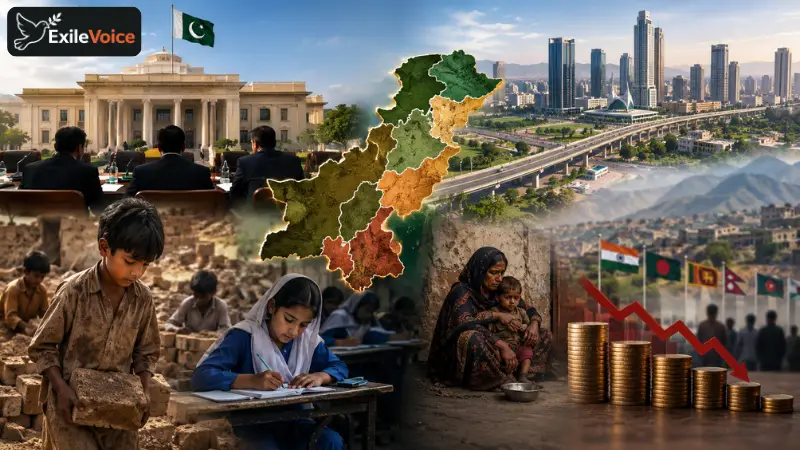
Data released on military expenditures indicates that Pakistan has implemented an 18 percent increase in its nuclear weapons program spending, reaching an estimated annual layout of roughly 1.5 billion dollars. This aggressive resource allocation significantly outpaces the relative financial trajectory of regional competitors, bringing critical questions regarding long-term fiscal sustainability and institutional accountability to the forefront of national economic policy. While maintaining a robust strategic deterrent is a fundamental imperative for national sovereignty, executing such an intensive expansion during a prolonged macroeconomic crisis requires a delicate balancing act between defense readiness and civilian financial stability.
The mechanics of financing this expanded defense budget have triggered intense backroom political maneuvering between the federal government and regional administrations. Rumors circulating within senior bureaucratic circles suggest a fiscal arrangement designed to secure massive cash surpluses from provincial budgets to offset federal deficits and sustain defense expenditures. Under this proposed framework, provinces are being pressured to provide massive fiscal rollbacks: Punjab is reportedly expected to yield nearly 700 billion rupees, while Sindh and Khyber Pakhtunkhwa (KP) are facing demands of 200 billion and 305 billion rupees, respectively.
The asymmetry of these provincial demands highlights deep structural flaws in the country's fiscal federalism. The target set for Khyber Pakhtunkhwa is particularly contentious. Despite having a smaller economic base and facing immense financial burdens due to ongoing counter-terrorism operations and post-merger tribal integration, KP's required contribution vastly outpaces that of Sindh, a province with a significantly larger revenue generator in the port city of Karachi. This unequal distribution of fiscal pressure risks stoking provincial grievances and undermining regional development. Compounding this issue is the complex role played by international lending frameworks. The International Monetary Fund (IMF) has tied its structural adjustment loans directly to the maintenance of strict provincial cash surpluses. While provinces like Khyber Pakhtunkhwa have carefully maintained these surpluses to comply with IMF guidelines and avoid new debt accumulation, critics argue that this fiscal discipline inadvertently serves a different purpose. Rather than funding local public infrastructure, health systems, or education, these hard-earned provincial surpluses are effectively acting as a financial life support system for central state spending and expanded defense procurement.
If regional administrations continue to prioritize central compliance over local economic welfare, they risk draining their own development funds and alienating local populations. To avoid structural economic collapse, the state must establish robust oversight mechanisms to verify that defense spending is optimized and free from institutional corruption. True national security cannot rest solely on strategic hardware; it requires an economically viable civilian foundation capable of sustaining the state's institutional weight over the long term.