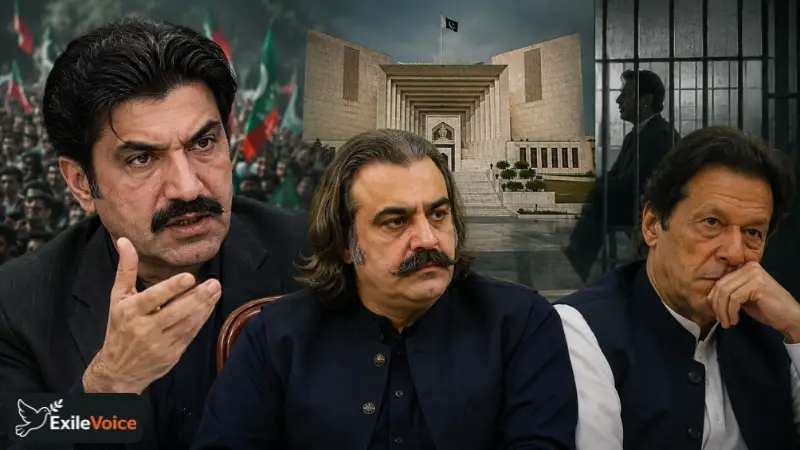
The internal dynamics of the Pakistan Tehreek-e-Insaf (PTI) have faced renewed scrutiny following a controversial constitutional application filed by prominent party member Sher Afzal Marwat. The petition, which seeks the judicial reinstatement of Ali Amin Gandapur as Chief Minister, has exposed deep operational rifts and conflicting strategic visions within the opposition party's senior leadership, challenging the traditional hierarchy during a period of prolonged political stress.
In his formal submission to the constitutional court, Marwat characterized the party founder, Imran Khan, as a convicted and disqualified individual whose decisions from incarceration carry problematic legal implications for the state's administrative machinery. The application asserts that Gandapur’s prior resignation from the chief ministership was executed under direct dictation from a single disqualified leader, rendering the administrative transition legally invalid. The inclusion of Khan’s formal conviction documentation as an exhibit to the petition marks a significant departure from standard party rhetoric, which typically rejects all judicial convictions against the leadership as politically motivated.
The response from Ali Amin Gandapur was immediate, illustrating the complex double-layered communication strategies currently utilized within PTI. Gandapur issued a public statement clarifying that his resignation was executed without delay in strict accordance with the explicit directives of his party leader, Imran Khan. He formally distanced himself from Marwat’s court petition, stating that he maintained no operational or legal connection to the ongoing judicial proceedings.
However, political analysts point out that Gandapur's public statement serves a dual purpose. While overtly demonstrating loyalty to the party's central command, the text explicitly confirms for the judicial record that a major provincial administrative decision was directed from a prison cell by a disqualified individual. This confirmation provides substantial evidentiary support for Marwat's legal argument regarding external dictation over public offices, creating an intricate legal paradox for the party's defense teams.
This development highlights long-standing concerns regarding internal intelligence vulnerabilities and strategic subversion within the party. Senior commentators note that Marwat's rapid ascent within the party structures and his unconventional legal strategies have frequently disrupted the core objectives established by the central leadership, including key leaders like Salman Akram Raja and Barrister Gohar Ali Khan. The current litigation appears designed to create legal friction between provincial administrative heads and the central leadership structure.
The broader implications of this internal dispute affect the party’s capacity to maintain a unified opposition front. With the provincial administration of Khyber Pakhtunkhwa serving as the primary institutional stronghold for PTI, legal challenges targeting the validity of its leadership threaten to destabilize the party's remaining governance platform. The coordination between internal legal challenges and state security narratives suggests a coordinated effort to transition the party toward a more compliant leadership tier.