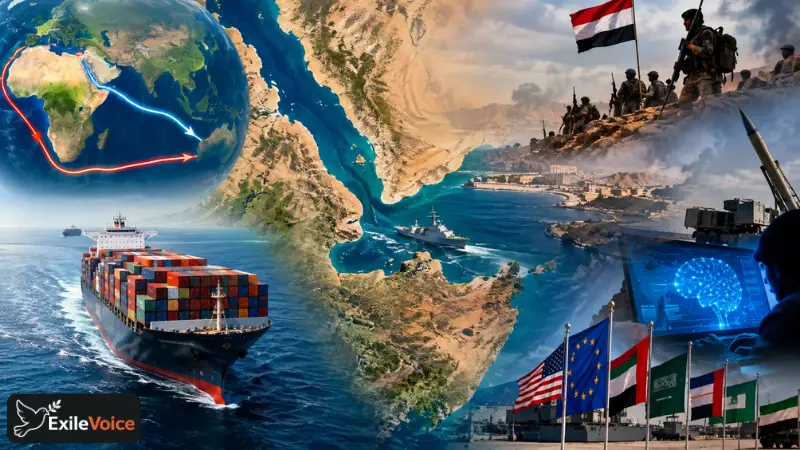
Recent security developments around the Bab el-Mandeb strait and the broader Red Sea corridor have heightened international concerns regarding maritime trade and regional stability. This vital waterway facilitates a substantial portion of global container shipping, connecting the Mediterranean Sea through the Suez Canal to the Indian Ocean. Disruptions in this critical trade route force commercial vessels to undertake lengthy detours around the Cape of Good Hope, significantly increasing transit times, fuel consumption, and operational costs for international commerce.
Parallel to maritime security challenges, regional dynamics involving neighboring states and coalition forces continue to evolve. Strategic shifts in control over key locations such as Marib and surrounding coastal zones illustrate the fluid nature of the conflict. Furthermore, international analysts have raised alarms regarding the reported misuse of advanced technologies, including artificial intelligence models, by regional actors attempting to develop sophisticated ballistic systems. These developments underscore the intersection of modern technological capabilities and asymmetric warfare.
Diplomatic and military observers emphasize that stability in the Horn of Africa and the Arabian Peninsula remains deeply interconnected. Competing territorial claims, landlocked nations seeking direct maritime access, and the strategic positioning of foreign military bases create a complex web of potential flashpoints. Addressing these multifaceted security challenges requires coordinated international cooperation to protect global supply chains and ensure freedom of navigation through one of the world's most critical economic corridors.