The Middle East faces a heightened state of alert following reports of explosions near critical nuclear and defense architecture in Israel and the United Arab Emirates. While initial state declarations point toward controlled defense testing and technical errors, international defense analysts suggest these incidents reveal a fragile security architecture prone to symmetric and asymmetric cross-border actions.
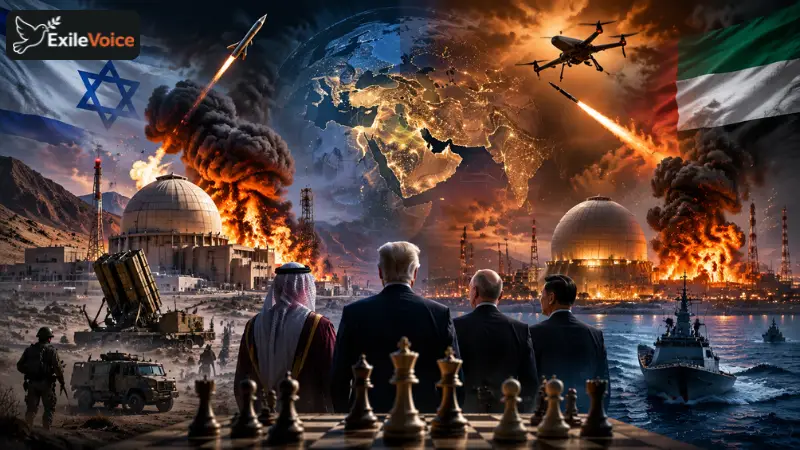
Initial media coverage highlighted a dramatic explosion in the Negev Desert near Israel’s Dimona nuclear complex and a defense installation run by Tomer Defense Firm, which specializes in rocket engines and defense interceptors. Official accounts from Israeli state firms classified the event as a pre-planned, controlled demolition. However, independent military reports, alongside prominent media coverage from regional outlets like the Times of Israel and global news syndicates, indicate potential damages extending to structural storage hubs housing advanced interceptor equipment, such as Arrow-3 missile platforms. This ambiguity underpins a broader framework of strict military information control active throughout the region, clouding clear verification of whether these events were internal failures or sophisticated cyber-kinetic actions.
Simultaneously, the United Arab Emirates faced a separate security crisis involving a suspected drone strike near its Barakah nuclear energy facility. Although UAE authorities refrained from directly attributing the operation to a specific state, official warnings addressed the "principal actors and their proxies," cautioning that threats to critical energy infrastructure carry severe regional consequences. Combined with reports indicating past clandestine aerial encounters involving Gulf and Iranian assets during major escalations, these multi-theater events confirm that energy and defense sectors are primary targets in modern grey-zone warfare.
The political layer of this escalation manifests in Washington, where US policy makers are reassessing military options. The administration has issued ultimatums regarding the renegotiation of regional security pacts, warning that continued regional posturing will leave "nothing left to negotiate." Given the high-stakes domestic environment ahead of upcoming US mid-term elections, tactical policy remains highly unpredictable.
Geopolitical analysts maintain that unless global powers like Russia and China establish concrete, visible diplomatic red lines behind closed doors, regional actors risk miscalculating the threshold for large-scale conventional engagement. The current dynamic remains a fragile, highly calculated escalation matrix where any minor tactical error near a nuclear or energy hub could destabilize transcontinental markets.