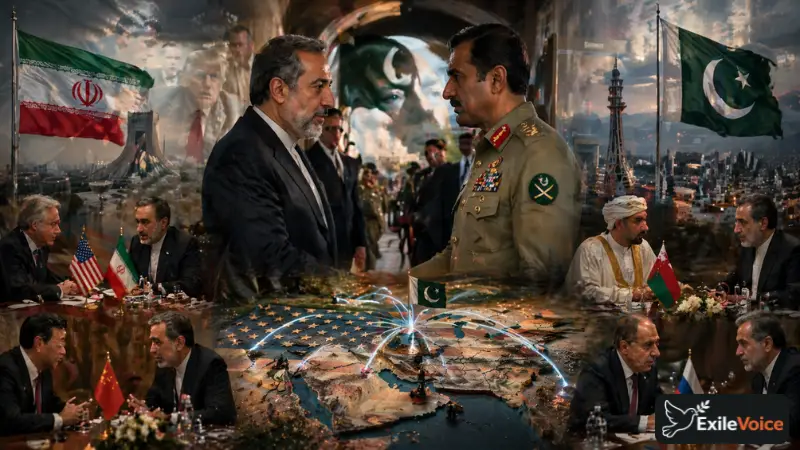
The geopolitical landscape of South Asia and the Middle East has entered a peculiar phase characterized by observers as a strategic "limbo." Neither fully at war nor entirely at peace, the region is witnessing a high-stakes game of diplomatic maneuvering. The recent return of Iranian Foreign Minister Abbas Araghchi to Pakistan marks a critical juncture in this process. While the high-profile, closed-door negotiations involving top US and Iranian officials seen in previous weeks have cooled, a new, more clandestine method of communication is emerging.
The current situation is defined by a deep internal division within the Iranian establishment. Reports from within Tehran suggest a fragmented leadership, with hardliners, pragmatic reformers, and the Revolutionary Guards each pursuing distinct agendas. This fragmentation is partly the result of recent Israeli and American strikes that targeted senior levels of the Iranian hierarchy, disrupting decades of established order previously maintained by Supreme Leader Ali Khamenei. Consequently, the new leadership, comprising lower-tier officials, operates with varying loyalties and incentives, complicating the negotiation process. Araghchi’s role is particularly scrutinized; it remains unclear whether he represents the entirety of the Iranian state or merely the faction favoring negotiation.
In this context, Pakistan has emerged as a vital logistical and diplomatic conduit. Acting as a "streaming service" for international diplomacy, Islamabad provides the platform for communication, though the "remote control", the ultimate decision-making power, remains in the hands of global powers like the US and Iran. This "shuttle diplomacy" is not limited to Pakistan. Araghchi’s itinerary includes Oman and Russia, indicating a broader regional effort to de-escalate tensions. Oman, notably the only Gulf nation spared from Iranian-backed attacks, continues to play its historical role as a neutral mediator. Meanwhile, the involvement of Russia suggests that China’s previous eight-point formula for regional stability remains a foundational element of these ongoing talks.
The significance of Araghchi’s latest visit to Pakistan lies in the "green light" he reportedly received to share specific Iranian demands and conditions with Western powers. This places Pakistan’s military and diplomatic leadership, specifically General Asim Munir, in an influential position. The transition from face-to-face US-Iran talks to mediated communication through Islamabad offers Pakistan an opportunity to enhance its international profile. As the US administration signals that direct talks are no longer the priority, the burden of conveying messages and negotiating terms falls on regional intermediaries. This shift necessitates a high level of diplomatic agility from Pakistan, as it navigates the conflicting interests of its neighbors and global partners in a region where the line between peace and conflict is increasingly blurred.