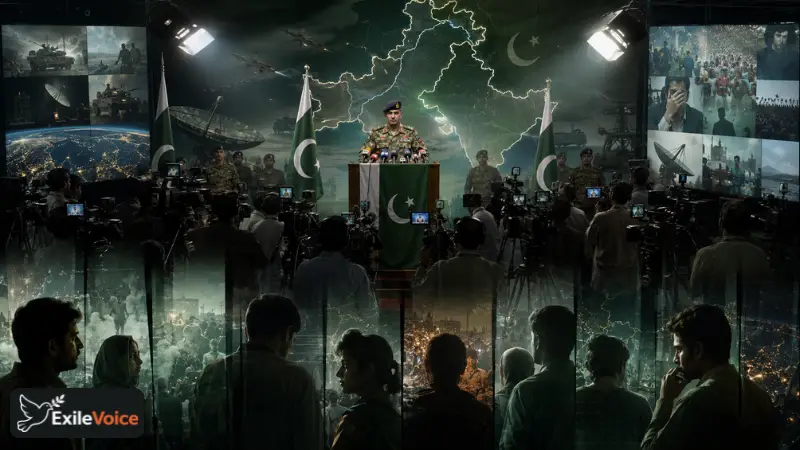
In the modern era of information warfare, strategic communication is as vital as physical defense. The recent three-hour press briefing by the Director General of the ISPR serves as a case study in how state institutions attempt to shape public perception through a mix of nationalism, historical reframing, and direct challenges to external adversaries. However, the efficacy of such communication is often measured by its internal consistency and its resonance with the domestic audience's lived experience.
A significant portion of the discourse focused on the concept of "truth" in the international domain, particularly concerning relations with India. While the military leadership urged neighboring states to adopt transparency, critics at home point to a "truth deficit" regarding internal matters. Professional insights into the briefing reveal a strategy of externalizing conflict to unify a fractured domestic base. By highlighting Indian disinformation and external threats, the institutional narrative seeks to position the military as the sole guardian of the nation’s survival, thereby insulating it from criticism regarding its domestic political role.
The rhetoric used during these sessions also warrants scrutiny from a professional diplomatic perspective. The use of informal or aggressive language when addressing external senior officers or naming military operations, such as references to "Sandhoor" and "Chunni Baboo", can be perceived as a departure from the disciplined, measured communication expected of a professional armed force. While such language may appeal to certain nationalist sentiments, it can undermine the institution's standing on the global stage, where decorum and precision are paramount.
Moreover, the briefing touched upon sensitive regional issues, including water rights and the future of Kashmir. The institutional stance that "all six rivers belong to Pakistan" and that the future of Kashmir rests solely with the Kashmiri people reflects a shift in narrative that must be synchronized with official foreign policy. When these statements are made by military representatives rather than the Foreign Office, it risks creating diplomatic confusion. For strategic communication to be effective, it must be rooted in a unified state narrative that respects the specialized roles of different government branches.
Ultimately, the challenge for Pakistan’s strategic communication apparatus is to bridge the gap between institutional rhetoric and public reality. As the populace becomes more information-savvy, "marathon transmissions" and managed media appearances are less effective than genuine accountability. A professional approach to public relations requires acknowledging past errors, such as the events of 1971 or recent judicial concerns, to build a credible foundation for future discourse.