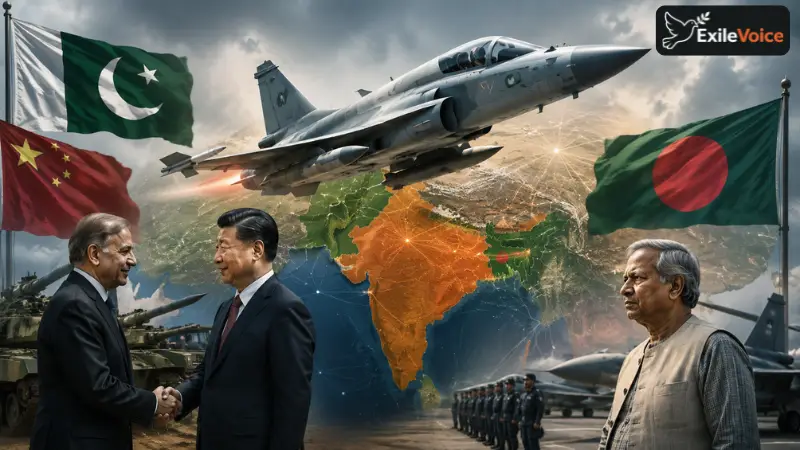
A major realignment of defense architecture is unfolding across the Bay of Bengal as Bangladesh finalizes a landmark agreement to acquire JF-17 Thunder fighter jets from Pakistan. The defense transaction, co-developed with China, has triggered immediate alarm bells in New Delhi's strategic establishment, altering the regional balance of power. For decades, India has viewed Bangladesh as a critical element of its immediate sphere of influence, utilizing close political ties to keep its eastern flank secure. The introduction of advanced, joint-venture defense hardware from Pakistan directly challenges this long-standing security assumption.
The JF-17 Thunder has become a cornerstone of Pakistan’s defense export strategy, offering cost-effective, multi-role combat capabilities equipped with modern radar systems and diverse weaponry configurations. By integrating this platform into its air force, Dhaka is signaling a significant departure from its historical dependence on Indian strategic calculations. Regional defense analysts note that Beijing remains the largest foreign investor and hardware supplier to Bangladesh. The introduction of Pakistani-manufactured aviation platforms means India is facing a scenario where it is increasingly surrounded by interconnected Chinese and Pakistani defense ecosystems on both its western and eastern borders.
This acquisition has prompted sharp rhetoric from Indian defense hawks and media outlets, who view the transaction as an aggressive geopolitical maneuver designed to encircle India. New Delhi has reportedly communicated its deep reservations to Dhaka, warning of potential long-term friction in bilateral relations. However, Bangladesh's willingness to proceed highlights a growing determination among South Asian states to diversify their defense partnerships and preserve strategic autonomy despite intense regional pressure.