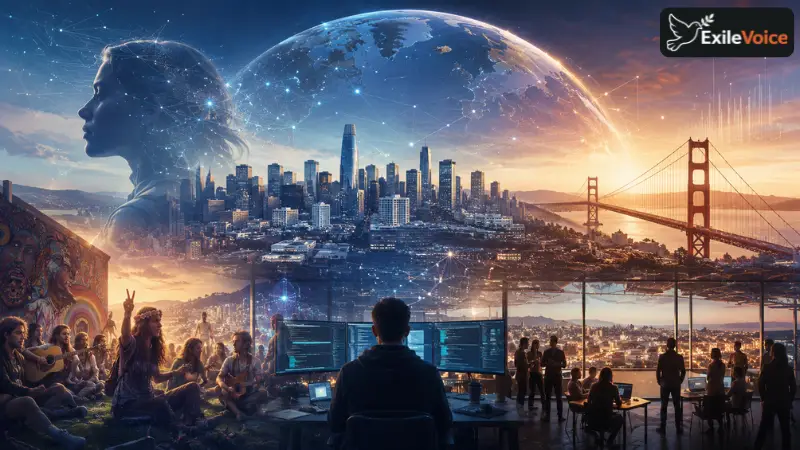
While Washington, D.C., remains the traditional seat of global political power, the San Francisco Bay Area, specifically Silicon Valley, has emerged as the world’s true center of influence. This region is not merely a geographic location; it is the engine room of the modern world, where the software that governs global communication, financial systems, media consumption, and emerging artificial intelligence is written.
The economic magnitude of this region is staggering. The state of California, if considered an independent entity, would boast the fourth-largest economy in the world, surpassing the total GDP of many major nations. Within the concentrated geography of Silicon Valley, the economic output dwarfs that of entire countries by orders of magnitude. This disproportionate power arises from a unique cultural ecosystem that prioritizes innovation, risk-taking, and a high tolerance for failure.
At the core of Silicon Valley's success is its role as an incubator for the next industrial revolution. While previous revolutions were fueled by physical infrastructure and factories, the current era is defined by the rapid advancement of computing and AI. This environment has attracted a global talent pool, fostering a culture of immigration-friendly policies and meritocratic progress. It is here that the algorithms determining the information flows of billions of people, what we watch, share, and believe, are developed and refined.
Historically, this region has also been the heartbeat of counter-culture and progressive movements. From the counter-culture explosion of the 1960s to today's tech-driven social transformations, the Bay Area serves as a testing ground for new ideologies. This blend of technological prowess and social progressive history makes it the most critical node in the global network. As the world becomes increasingly digital, the influence of these tech hubs is only set to expand, positioning the architects of software as the de facto architects of the global cultural and political reality.