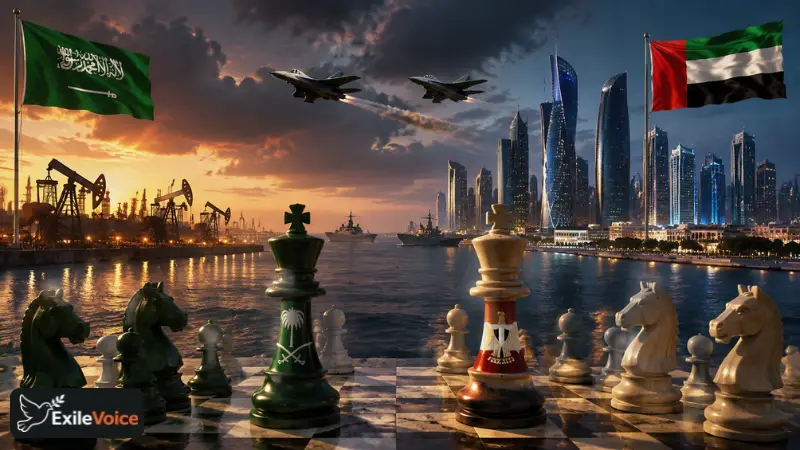
For decades, the alliance between Saudi Arabia and the United Arab Emirates (UAE) served as the bedrock of Gulf stability. However, a new era of competition is emerging, as both nations vie for economic dominance and regional influence. This shift is not just a diplomatic curiosity; it has profound implications for "client states" like Pakistan, which find themselves caught between two "sugar daddies."
The friction primarily stems from two sectors: oil and financial hubs. Historically, Saudi Arabia has acted as the "grandfather" of OPEC, dictating production quotas to maintain price stability. The UAE, seeking to maximize its own revenue to fund massive diversification projects, has found these quotas increasingly restrictive, leading to whispers of an OPEC exit. This economic friction is compounded by Saudi Arabia's "Vision 2030." Under Crown Prince Mohammed bin Salman (MBS), Saudi Arabia is no longer content being just an oil giant; it wants to be a financial and tech hub. This directly threatens the established dominance of Dubai and Abu Dhabi. Saudi Arabia’s new policy requiring international companies to move their regional headquarters to Riyadh or lose government contracts is a direct shot across the bow of the UAE’s service-based economy.
The rivalry extends into proxy conflicts across the region. In Sudan, Yemen, and Libya, the two nations have frequently backed different factions, reflecting their diverging visions for regional security. For Pakistan, this presents a delicate balancing act. While Pakistan has traditionally leaned toward the Saudi "lap" for immediate financial bailouts, the UAE remains a critical partner for trade and labor exports.
Recent incidents, such as the suspected attacks on ships near Fujairah and the subsequent Iranian denials, have further muddied the waters. The UAE has signaled its right to respond to these provocations, while the US has attempted to play a stabilizing role, maintaining that recent skirmishes have not yet broken the fragile ceasefires in the region. As the UAE dominates headlines with its defensive intercepts and diplomatic assertions, the world is witnessing the rise of a more independent and assertive Abu Dhabi, no longer willing to sit in Riyadh’s shadow.