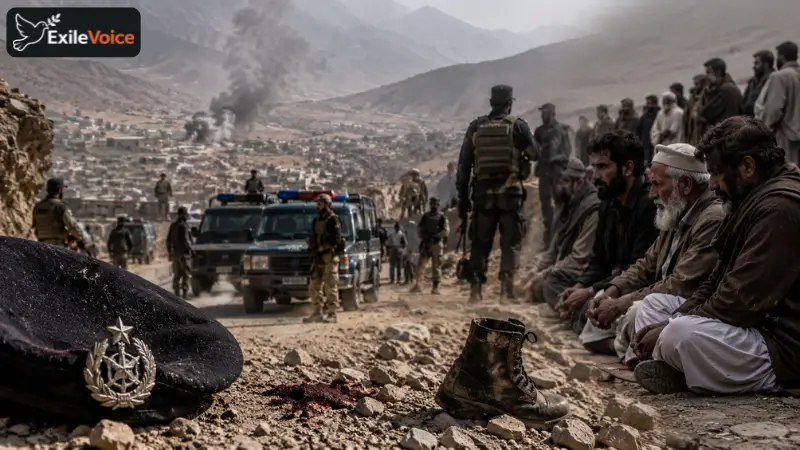
The security landscape in Pakistan has faced renewed scrutiny following a violent attack in the Ziarat district of Balochistan. The incident, which resulted in the loss of nine police personnel and the abduction of several others, highlights the escalating instability in the region. This attack, attributed to militant groups, underscores the severe risks faced by security forces and the ongoing challenges in maintaining law and order.
The aftermath of the attack revealed a profound sense of alienation among the local population. Reports from the ground indicate that grieving families and local community members explicitly requested that government officials, including senior administration and security agency representatives, not attend the funeral proceedings. The refusal to accept state honors for the fallen personnel is a significant indicator of the deteriorating trust between the local populace and the governing institutions in the province.
This incident is not an isolated event but rather reflective of a broader, more complex security crisis in Balochistan. The failure to effectively counter such attacks has led to intense criticism of the state's security strategies. The narrative that the government has successfully "foiled" an attack is increasingly challenged when the human cost, the death of personnel and the kidnapping of others, is factored into the analysis.
Furthermore, the lack of a cohesive security policy that addresses both the operational capabilities of militant groups and the socio-political grievances of the Baloch people continues to complicate the situation. The incident in Ziarat serves as a somber reminder of the limitations of purely kinetic approaches to security without accompanying efforts to address the underlying causes of volatility in the region. As the situation remains tense, the urgent need for a more comprehensive and inclusive approach to regional security is clearer than ever.