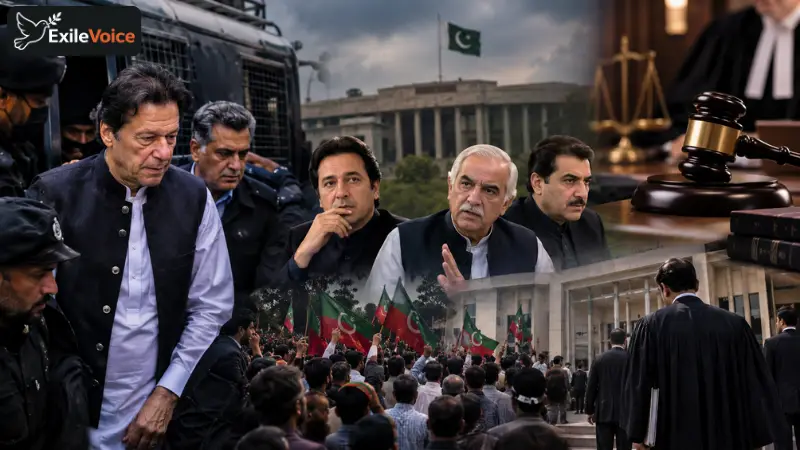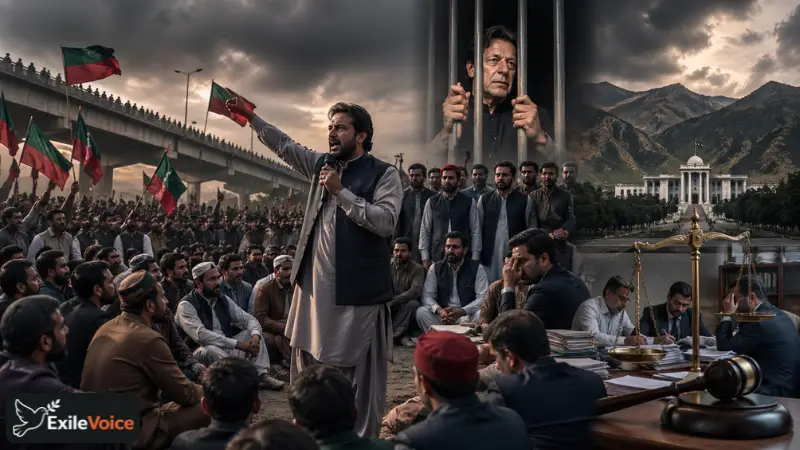
The internal dynamics of Pakistan Tehreek-e-Insaaf (PTI) are reaching a boiling point as grassroots workers and local leaders express growing frustration with the party's central command. At a recent "Jirga" held at the Khushal Garh Bridge, a strategic location connecting Punjab and Khyber Pakhtunkhwa (KP), Senator Khurram Zeeshan led a protest that highlighted a widening rift within the party. The assembly was notable not just for who was there, but for who was conspicuously absent.
Reports indicate that despite the high stakes of the gathering, the central leadership of PTI and key officials from the KP government were nowhere to be found. Prominent figures such as Shehryar Afridi, Ali Asghar, and even the Provincial President Junaid Akbar did not attend. This absence has fueled rumors of a "leadership vacuum" at a time when the party's founder, Imran Khan, remains incarcerated. The workers at the bridge issued a stern 15-day ultimatum to the party leadership: present a concrete plan for the release of Imran Khan and address his health concerns, or the workers will take unilateral action based on the decisions made during their independent Jirga.
The situation in Khyber Pakhtunkhwa is further complicated by legal and administrative challenges. The KP government, led by Ali Amin Gandapur, had previously attempted to withdraw cases related to the May 10 riots (following the arrest of Imran Khan). However, this move was challenged in court. The judiciary recently ruled that the provincial government cannot unilaterally withdraw these cases, insisting that legal proceedings must continue. This has put the PTI-led provincial government in a precarious position, caught between judicial mandates and a restless base demanding the exoneration of their comrades.
Furthermore, administrative friction is rising within the province. There are reports of provincial cadre officers being overlooked for appointments in favor of federal officers. This has led to a sense of demoralization among local bureaucrats, some of whom are reportedly seeking early retirement. The perception that the provincial administration is being steered by federal influencers rather than local representatives is adding another layer of instability to an already volatile political landscape.