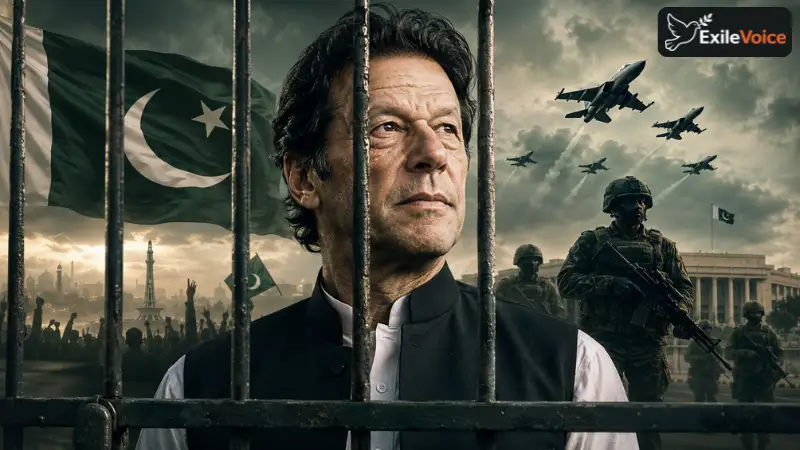
In a surprising turn of events on Sunday, May 10, the Pakistan Tehreek-e-Insaf (PTI) issued a formal statement attributed to its founder, Imran Khan, currently incarcerated in Adiala Jail. The message, "The army is mine and the country is mine," has sparked intense debate regarding the party's current strategy. Coming exactly one year after the "May 7" defense victory, the statement appears to be a calculated effort to mend fences with the military establishment or, at the very least, to neutralize the "anti-state" label that has plagued the party.
The timing of the statement is particularly curious. Despite the lack of scheduled visitor access to Khan over the weekend, the PTI Secretariat released this message alongside a series of congratulatory notes to the Pakistan Air Force (PAF) for their professional excellence. The narrative being pushed is that the current strength of Pakistan’s defense, including the acquisition of J-10C fighter jets from China, is a direct result of Imran Khan’s visionary leadership during his tenure as Prime Minister.
Critics and political analysts suggest that this "loyalty offensive" may be the result of internal or external pressures. By aligning itself so closely with the military’s successes, PTI is attempting to reclaim its space within the traditional power structure of Pakistan. This reflects a recurring theme in the politics of nations like Myanmar and Thailand, where political survival is often tied to the military’s approval, regardless of the populist sentiment on the streets.
However, this pivot raises fundamental questions about the future of civilian supremacy in Pakistan. If the largest political party in the country feels compelled to issue statements of loyalty to the army to remain viable, it underscores the deep-seated "hybrid" nature of the state. Whether this move will lead to a genuine reconciliation or is merely a tactical retreat by the PTI leadership remains to be seen.