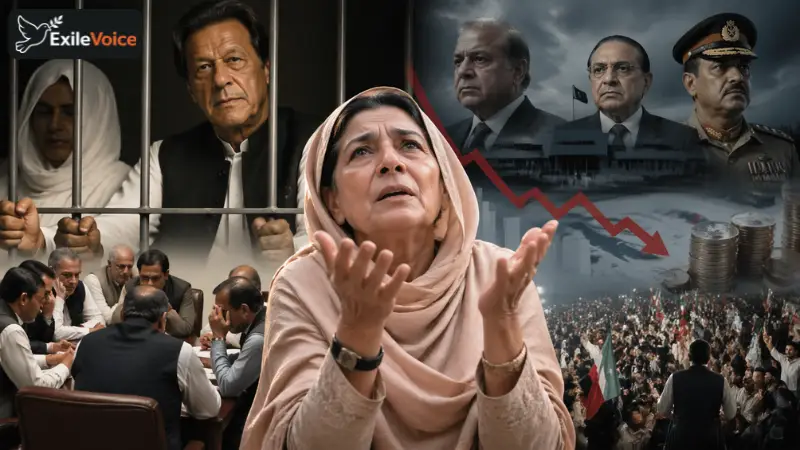
The internal landscape of Pakistan’s primary opposition party, Pakistan Tehreek-e-Insaaf (PTI), is undergoing a visible and painful transformation. As of late April 2026, the party finds itself at a crossroads, struggling to translate its massive social media following into effective "street power" or legislative pressure. This shift was most poignantly illustrated by the recent statements of Aleema Khan, sister of the incarcerated former Prime Minister Imran Khan, outside Adiala Jail.
Historically, the leadership's tone was one of command and confidence, often rebuking party members for their perceived inaction. However, recent observations reveal a shift toward "pleading." Aleema Khan’s recent addresses have moved from assertive mandates to humble requests, urging PTI members of provincial and national assemblies to join the sit-ins and protest for the basic rights of Imran Khan and Bushra Bibi. This change in "tone and tenor" suggests a growing realization that the party’s organizational structure may be fracturing under the weight of prolonged state pressure.
Despite these internal challenges, PTI continues to mount an intellectual offensive against the current Sharif-Zardari-Asim regime. The party recently released a comprehensive economic critique, orchestrated by former Finance Minister Taimur Jhagra. The analysis argues that the current administration is surviving on a "debt-trap" model. By relying on loans to stimulate artificial growth, the regime is ignoring the flight of Foreign Direct Investment (FDI). Multinational companies are reportedly withdrawing capital rather than reinvesting, leading to a scenario where any marginal GDP growth is negated by Pakistan's rapidly expanding population.
The upcoming rally in Muzaffarabad on April 25 is being touted as a potential catalyst for "street mobilization." However, skepticism remains high among political analysts. The disconnect between the party’s grassroots support and its leadership’s ability to coordinate large-scale movements is becoming more apparent. While the Chief Minister of Khyber Pakhtunkhwa is expected to lead the charge, the question remains whether PTI can move beyond digital activism to force tangible political change in a highly controlled environment.