

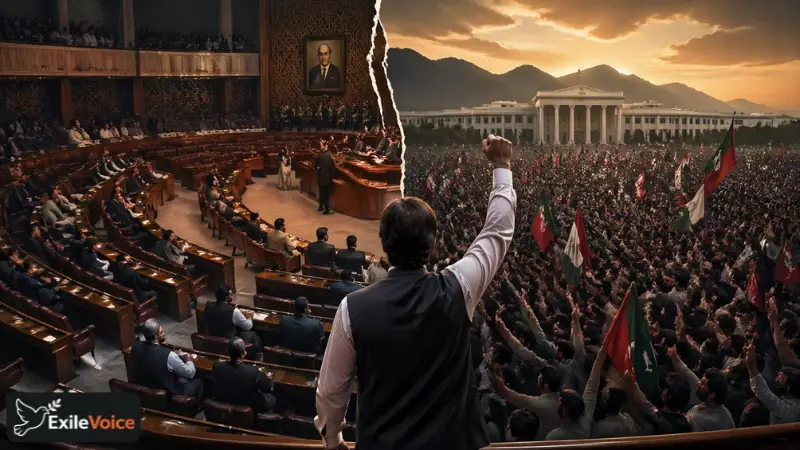
The political landscape of Pakistan is currently witnessing a significant debate regarding the participation of the Pakistan Tehreek-e-Insaf (PTI) in the legislative system. Following recent reports from inside Adiala Jail, PTI founder Imran Khan has reportedly signaled a major shift in strategy: the potential mass resignation of all party members from provincial and national assemblies, with the notable exception of Khyber Pakhtunkhwa (KP). This move, if executed, represents more than just a protest; it is a calculated attempt to delegitimize a system that the party labels as "Form 47 military raj."
Professional analysis suggests that PTI's continued presence in the assemblies has become a double-edged sword. On one hand, it provides a platform for voice; on the other, it creates a "containment" effect. By sitting in the opposition benches of the Punjab and National Assemblies, PTI members inadvertently provide a veneer of democratic legitimacy to the current administration. For the international community, the presence of the main opposition party in parliament serves as a signal that the democratic process, however flawed, is functioning. A total exit would strip away this facade, forcing the international community and diplomatic circles to acknowledge the absence of a genuine opposition within the legislative framework.
Furthermore, internal critiques suggest that the "assembly lifestyle" has diluted the revolutionary fervor of some party members. Reports indicate that several legislators have become "adjusted" to the perks of the system, accepting committee chairmanships, government vehicles, and the associated status. This entrenchment makes them vulnerable to the influence of the Speaker and the establishment, effectively silencing them. The argument for resignation is rooted in the belief that the party must return to its roots as a grassroots movement rather than being a sidelined participant in a "rigged" parliamentary setup.
The strategy also carries significant geopolitical weight. When Pakistani officials engage with global powers, they often point to PTI’s participation in the assemblies as proof of stability. A vacuum created by mass resignations would pose a serious question to the legitimacy of the current government’s mandate on the world stage, particularly at a time when Pakistan is seeking international financial support and diplomatic validation. As PTI contemplates this "nuclear option," the focus remains on whether the party can maintain its influence from the streets and the KP government while leaving the central and Punjab legislative halls empty.

