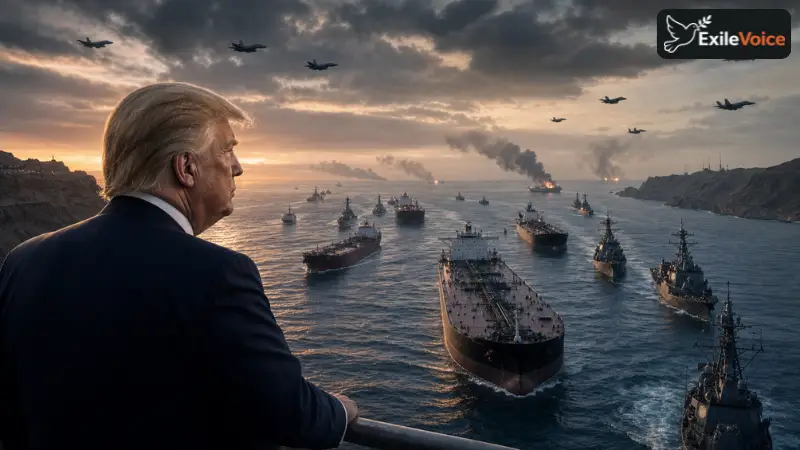
In a move that has sent ripples through the global geopolitical landscape, President Donald Trump has officially sanctioned "Project Freedom," a high-stakes maritime operation aimed at securing the Strait of Hormuz. Announced on May 4, 2026, the operation is framed as a humanitarian effort to rescue nearly 1,100 oil tankers and neutral vessels currently stranded in the Persian Gulf. According to the U.S. Central Command (CENTCOM), these vessels have been trapped for weeks, facing critical shortages of water, food, and basic sanitation.
The strategic timing of this announcement is impossible to ignore. It comes just ten days before President Trump’s scheduled high-profile summit with Chinese President Xi Jinping. Analysts suggest that the U.S. administration is desperate to project strength and resolve, seeking to force a surrender from Iran before sitting down at the negotiating table with the world’s other superpower. For Trump, clearing the Strait of Hormuz, whether through diplomacy or force, is a prerequisite for maintaining his image as a dominant global leader.
However, the military buildup accompanying Project Freedom tells a more aggressive story than the "humanitarian" label suggests. CENTCOM has deployed 15,000 combat troops, over 100 land and sea-based aircraft, and multiple guided-missile destroyers to the region. This massive mobilization is designed to provide a "peaceful escort" for stranded ships, but the U.S. has explicitly warned that any interference, presumably from Iran’s Islamic Revolutionary Guard Corps (IRGC), will be met with forceful retaliation.
The diplomatic situation is equally tense. Iran finds itself increasingly isolated as traditional regional allies, such as Oman, have distanced themselves from Tehran’s maritime claims. Reports indicate that Oman is adhering strictly to international maritime law and the UN Convention on the Law of the Sea, effectively allowing U.S.-guided ships to navigate through its territorial waters to bypass Iranian blockades. This shift in Omani policy represents a significant political setback for Iran, which had hoped to establish a joint maritime control zone with its neighbor.
Despite the rhetoric and the military posturing, the first 24 hours of the operation have seen a curious lack of movement. Shipping companies, wary of becoming collateral damage in a "Short War," have largely kept their vessels anchored. This hesitation was likely reinforced by reports of a projectile hitting an oil tanker off the coast of Fujairah shortly after Trump’s announcement. While no group has claimed responsibility, the incident serves as a chilling reminder of how quickly "Project Freedom" could escalate into a broader regional conflict.