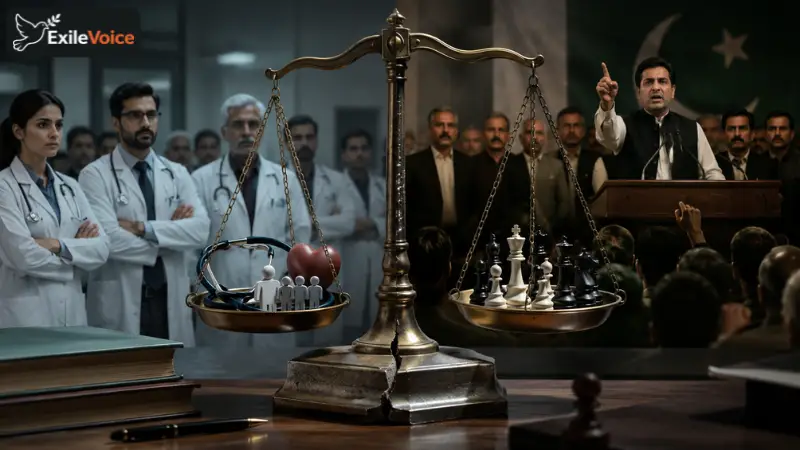
Professional organizations in Pakistan are facing intense criticism regarding their role in the political landscape. Recently, the leadership of a prominent medical association drew backlash after providing a forum for political discourse that many of its members found inappropriate. By allowing high-ranking officials to engage in political attacks during a professional event, the organization has been accused of compromising its stated non-political mandate.
The controversy highlights a common challenge: professional associations attempting to leverage political connections to advance institutional goals, such as hospital construction or medical projects, often risk losing their neutrality and the trust of their members. Critics argue that when professional bodies prioritize access to power over their ethical and representative responsibilities, they effectively become tools for political agendas.
The incident has sparked a broader debate about the influence of political patronage within professional institutions. Members are now questioning whether leadership elections are decided on merit or on nepotistic lines, such as educational background or regional ties. The demand for transparency, the protection of non-political mandates, and a focus on core professional issues has become a rallying cry for many. As these organizations navigate these challenges, the need for a strict separation between professional advocacy and political alignment remains a critical priority for maintaining integrity.