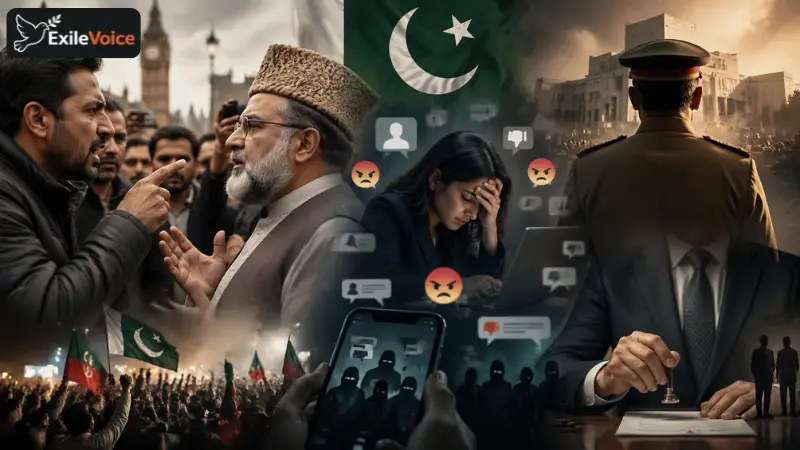
The current political climate in Pakistan is increasingly defined by raw, unscripted interactions between public figures and the citizenry, particularly within the Pakistani diaspora. A recent incident in London involving Maulana Tahir Ashrafi highlights the narrowing gap between leaders and the public. During a public encounter, Ashrafi was confronted by individuals questioning his shifting political allegiances and his support for various military and political administrations. These interactions signify a shift from traditional, controlled political messaging to a more confrontational and immediate form of public accountability.
The dialogue in London centered on the perceived "puppet" nature of various political figures and the role of the establishment in Pakistani governance. Such confrontations are becoming common for Pakistani politicians traveling abroad, reflecting a deep-seated frustration among the diaspora regarding the domestic political situation, including the treatment of opposition leaders and their families. While the decorum of these interactions is often debated, they serve as a barometer for the "political temperature" of the nation, indicating that traditional figures can no longer rely on their titles to shield them from pointed criticism.
Parallel to these physical confrontations is the debate over "digital violence" and the use of cybercrime laws. Journalist Gharidah Farooqi recently announced legal action against individuals for alleged online harassment and character assassination. This move has reignited discussions on the "Woman Card" and the boundaries of journalistic immunity versus public criticism. Critics argue that when public figures occupy prominent spaces, their choices, including their professional conduct and public image, become subjects of public commentary. The tension lies in distinguishing between legitimate criticism and genuine harassment.
Furthermore, the administrative landscape in Pakistan remains volatile. News of promotions for officials who were previously involved in controversial cases against opposition members, such as the reported promotion of Arif Khan Yusufzai, has caused significant unrest among political workers. These administrative decisions are often viewed through a partisan lens, where rewards and punishments seem tied to political loyalty rather than merit. For any government, maintaining the morale of its base requires a transparent system of accountability where actions perceived as "oppressive" are not seen to be rewarded.