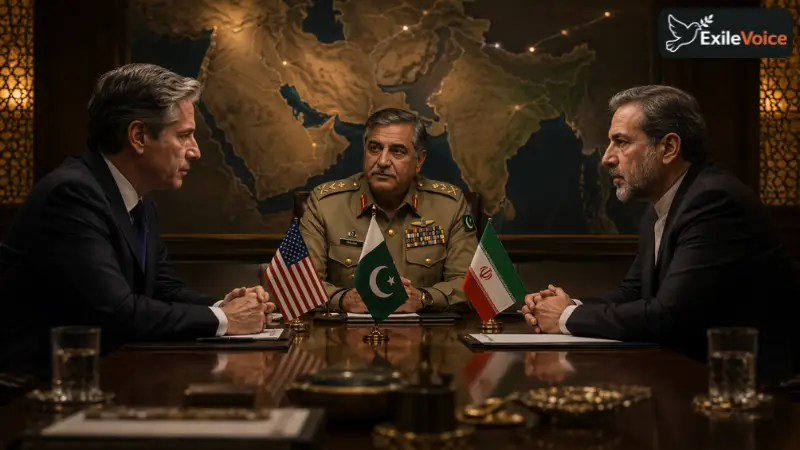
In a striking development that highlights the changing dynamics of global diplomacy, the Pakistani military leadership has emerged as a central mediator in facilitating high-stakes, confidential backchannel negotiations between the United States and the Islamic Republic of Iran. US Secretary of State Marco Rubio recently confirmed that Pakistan’s military chief, Field Marshal Asim Munir, is scheduled for a critical diplomatic mission to Tehran. Rubio indicated that Washington remains in constant communication with Pakistani intermediaries, expressing cautious optimism that a comprehensive diplomatic breakthrough between the long-time adversaries may be closer than previously anticipated. This public acknowledgment confirms months of intense, quiet diplomacy conducted by Pakistani officials aimed at de-escalating a dangerous military standoff in the region.
The architecture of this delicate mediation operation has been quietly built over several weeks, utilizing a multi-layered diplomatic framework. While Field Marshal Asim Munir leads the strategic military-to-military engagement, civilian officials such as Mohsin Naqvi have undertaken multiple unpublicized visits to Tehran to bridge administrative gaps. Operating alongside regional partners like Kuwait, the Pakistani delegation has focused on establishing a sustainable baseline for an agreement. Iranian state media outlets have recently verified these efforts, claiming that a foundational draft agreement addressing core mutual grievances has been established. While technical details regarding sanctions relief, regional proxies, and monitoring mechanisms remain unresolved, the broader framework of the treaty has achieved a level of consensus that could allow for an official announcement in the near future.
Pakistan’s motivation to act as a diplomatic bridge is rooted in its own geopolitical vulnerabilities. Sharing a lengthy, complex border with Iran, any full-scale regional conflict between Washington and Tehran would have immediate, catastrophic economic and security repercussions for Islamabad. For the Pakistani military establishment, successfully navigating this mediation not only prevents regional instability but also elevates Islamabad's diplomatic leverage on the global stage, proving its utility to the Trump administration as a stabilizing force in South Asia and the Middle East.
However, the path forward remains highly unpredictable, clouded by mixed signals emanating from Washington. The internal friction within the US cabinet, evidenced by the sudden resignation of top intelligence officials who disagreed with aggressive executive stances, suggests that two divergent paths lie ahead. The administration is balancing on a razor's edge between finalizing a historic diplomatic accord and returning to active military engagement. President Trump’s decision to remain grounded in Washington DC during a major holiday weekend further underscores that the negotiations have reached a critical juncture. Whether Pakistani military diplomacy results in a historic regional peace treaty or merely delays an inevitable confrontation depends entirely on how the executive branch in Washington resolves its internal policy divides over the coming days.