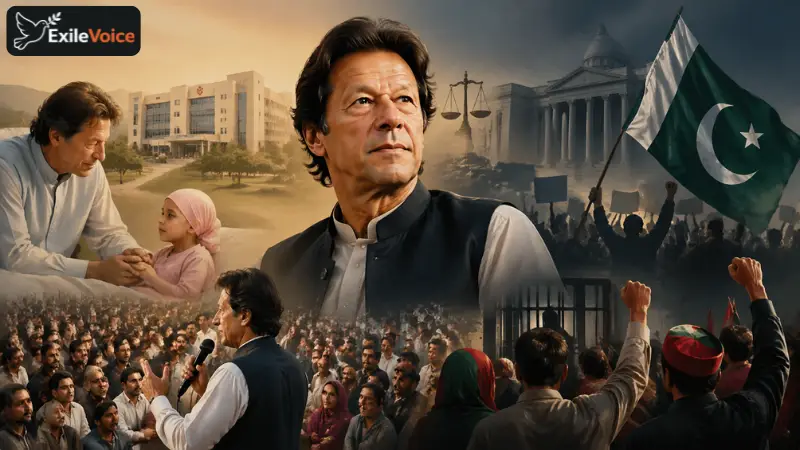
The landscape of Pakistani politics underwent a seismic shift exactly three decades ago when Imran Khan laid the foundation of Pakistan Tehreek-e-Insaf (PTI). While many viewed the transition of a cricketing icon into the political arena with skepticism, the roots of this movement were not planted in a quest for power, but in a profound personal tragedy and a subsequent humanitarian mission. The struggle began when Khan's mother was diagnosed with cancer, revealing a harrowing reality: Pakistan lacked specialized facilities for the disease. This personal grief evolved into the Shaukat Khanum Memorial Cancer Hospital, a project that redefined philanthropy in the country.
During the fundraising efforts for the hospital, Khan’s interactions with the common populace served as a catalyst for his political awakening. He witnessed firsthand that the underprivileged sections of society were not just battling health crises, but were victims of a systemic failure in accountability and justice. The realization that charity alone could not fix a broken state led to the birth of PTI. The movement was built on the premise that without "Insaaf" (justice) and equality before the law, sustainable development and social welfare would remain unattainable dreams.
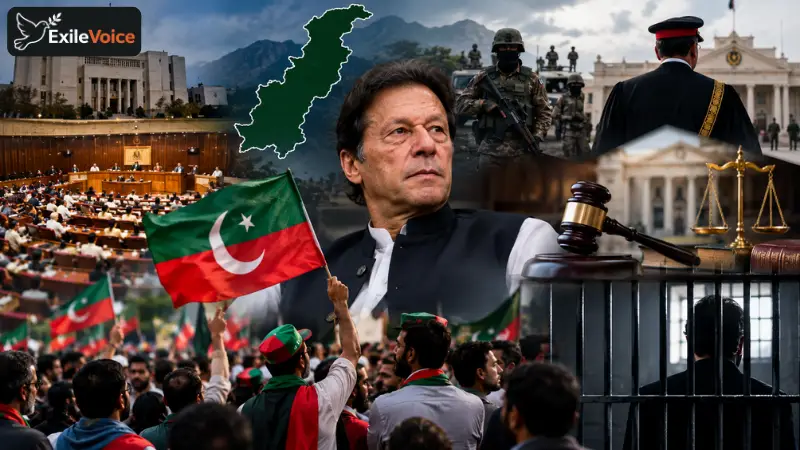
Thirty years later, the political discourse in Pakistan has matured into a struggle for civilian supremacy and institutional accountability. The current state of affairs, marked by the incarceration of political leadership and crackdowns on party workers, highlights the ongoing friction between democratic aspirations and established power structures. Despite the challenges, the most significant achievement of this three-decade journey is arguably the "awareness" (shaoor) instilled in the public. The masses are now increasingly cognizant of the underlying forces that influence the country's governance and the structural impediments to economic and social progress.