

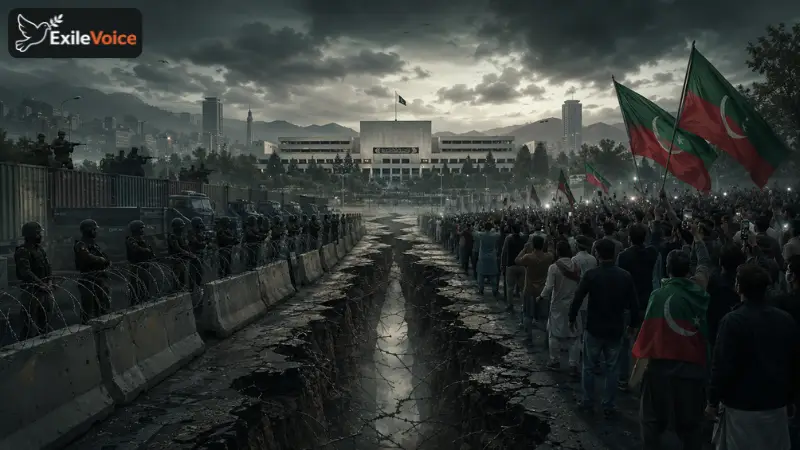
In the contemporary landscape of Pakistani politics, the events of May 9 have evolved beyond a single day of unrest into a defining "super-myth" and a permanent scar on the national psyche. This day continues to dictate the terms of engagement between the state and the Pakistan Tehreek-e-Insaf (PTI), acting as a formidable barrier to any potential political reconciliation. Despite concerted efforts by the establishment to move past these events, the PTI remains a central and unyielding reality in the country's domestic landscape.
The resilience of the PTI indicates a fundamental shift in traditional civilian-military power dynamics. Historically, power-sharing operated under a predictable set of rules, but the post-May 9 era has challenged these norms. The state’s attempt to market "Marka-e-Haq", a narrative of decisive victory and the restoration of order, is increasingly losing its "sheen". As public skepticism grows, the effectiveness of grand state spectacles has diminished, replaced by a realization that political stalemates cannot be resolved through optics alone.
Central to this tension is the conflicting mythology surrounding May 9. While the state views it as a "red line" warranting the total exclusion of the PTI from the mainstream, the party and its supporters view it through a lens of victimhood and state overreach. This disagreement has led to a total paralysis in governance. The persistence of the PTI, even under extreme pressure, suggests it has become a vehicle for a specific brand of anti-establishment sentiment that shows no signs of dissipating.
Furthermore, this political struggle is directly contributing to economic paralysis. As the state focuses its energy on managing the PTI "threat," promised economic dividends and stability remain elusive for the common citizen. The "May 9 scar" is as much an economic wound as a political one; the lack of consensus continues to deter long-term investment and the structural reforms necessary for Pakistan’s survival. Ultimately, the reliance on legacy tactics of political engineering is facing diminishing returns in an age of digital connectivity.

