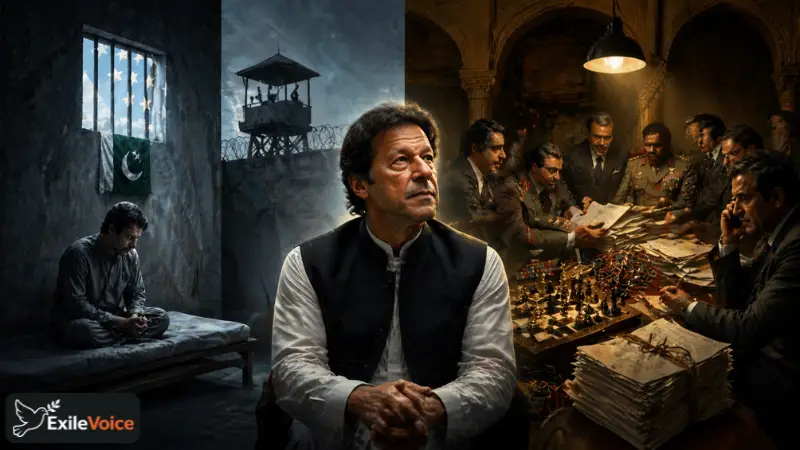
As the imprisonment of former Prime Minister Imran Khan approaches the thousand-day mark, a deeper psychological and cultural question has emerged within the Pakistani body politic: Does the nation value principle, or is it fundamentally committed to the culture of "Jugaad"? In the local context, jugaad refers to the art of makeshift solutions, finding a way to bypass laws, protocols, and constitutions to reach a goal by any means necessary.
For three years, the Pakistani state has operated under this "Jugaad" framework. Despite the lack of constitutional decorum or legal precedents, the current administration continues to function with the quiet acceptance of global powers. The irony is stark: while world leaders might avoid dealing with a 22nd-grade officer in other nations, in Pakistan, this bypass of civilian authority has become a standardized fact of life. This lawlessness, once a bug in the system, has been repackaged as a feature of governance.
In contrast, Imran Khan’s political identity is increasingly defined by his refusal to engage in this culture of compromise. Old interviews, recently resurfaced, show a younger Khan criticizing the "Washington-dictated" decisions of past leaders like Benazir Bhutto and Nawaz Sharif. He famously opted out of elections twenty years ago based on principles that he maintains to this day. His "Thousand-Day Vigil" in prison is seen by his supporters as an ultimate sacrifice for the "Rule of Law."
However, a pragmatist’s question looms: What is the utility of standing on principle in a country that prefers the shortcut? While Khan’s sisters and a dwindling circle of loyalists continue to demand justice at the gates of Adiala Jail, much of the political class and international community have moved on. The culture of jugaad allows the country to "carry on" despite the imprisonment of its most popular leader. The tension between Khan’s vision of a principled state and the reality of a pragmatically compromised nation remains the central conflict of modern Pakistan. Whether the "principled stand" will eventually break the cycle of makeshift governance or be buried by it is a question that continues to haunt the nation's future.