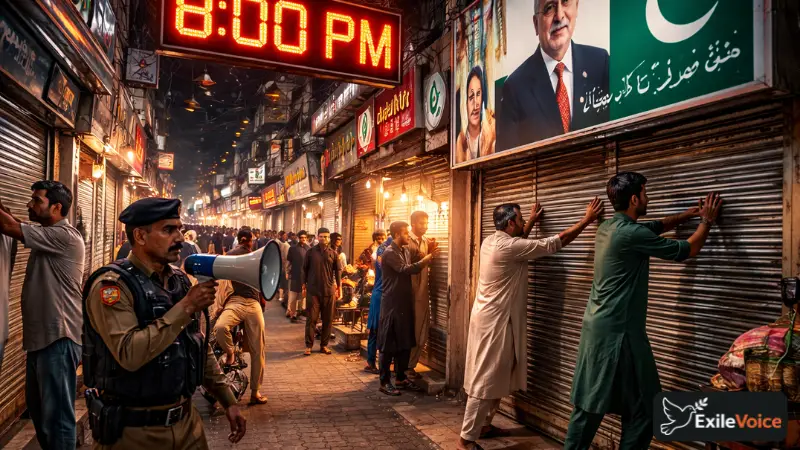
In response to escalating global fuel prices and domestic economic pressures, the Government of Pakistan, led by Prime Minister Shehbaz Sharif, has announced a sweeping national energy conservation plan. The centerpiece of this strategy is the mandatory closure of markets, shopping malls, and commercial centers by 8:00 PM across all major provinces, including Punjab, Sindh, Balochistan, and the Capital Territory.
The policy aims to significantly reduce petroleum and electricity consumption as the nation grapples with the financial fallout of the blocked Strait of Hormuz and the subsequent spike in international oil prices. While the general commercial deadline is set at 8 PM, the government has provided specific exemptions for essential services. Bakeries, pharmacies, restaurants, and traditional ovens (tandoors) are permitted to remain operational until 10:00 PM to ensure public access to food and medicine. Marriage halls and other private event spaces are also required to conclude operations by 10 PM.
This move has met with a complex mix of public and commercial reactions. Historically, Pakistan has a vibrant late-night shopping culture, particularly in metropolitan hubs like Karachi and Lahore. While the Sindh Traders Alliance has surprisingly expressed initial support, likely due to back-channel negotiations, other merchant groups remain concerned about a potential short-term decline in sales. However, economic experts argue that such "smart lockdowns" are a standard global practice in nations like the UK and Germany, where structured commercial hours contribute to a more balanced work-life dynamic and lower national energy bills.
The governance challenge lies in the consistent enforcement of these hours. Past attempts at daylight savings and similar conservation measures in Pakistan were often thwarted by public resistance and a refusal to adjust established social clocks. This time, the stakes are significantly higher, with the national carrier (PIA) already suspending several international routes due to high jet fuel costs and the provincial government in Balochistan attempting to regulate the price of smuggled Iranian oil to mitigate local shortages. The success of this 8 PM lockdown will serve as a critical test of the administration's ability to implement structural change during a period of national crisis.