

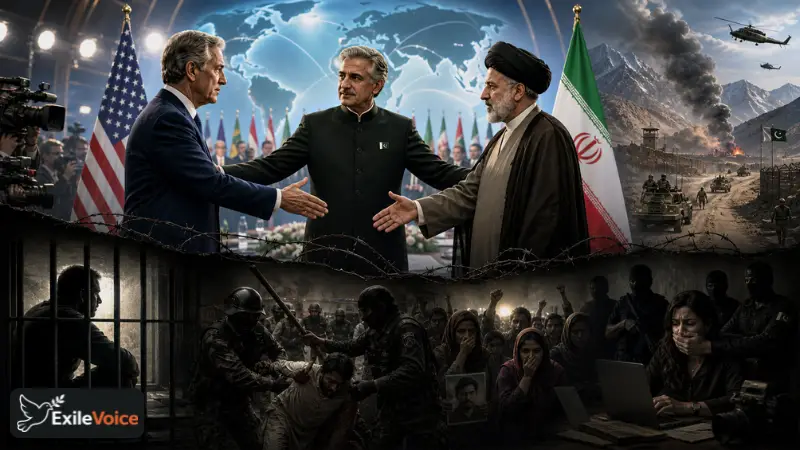
In the high-stakes world of international diplomacy, Pakistan has recently emerged as a pivotal mediator between the United States and Iran. This "moment in the sun" has seen Pakistani leadership lauded by global powers, including surprising praise from the U.S. administration. However, this external diplomatic success masks a darkening internal reality characterized by political repression and a systematic crackdown on domestic dissent.
The irony of Pakistan’s current standing is stark. As the country’s diplomats and military leadership receive accolades for their role in de-escalating Middle Eastern tensions, the domestic political landscape is fraught with instability. The incarceration of former Prime Minister Imran Khan and the subsequent pressure on his political party, the PTI, represent a significant contraction of democratic space. Observers note that the international community’s reliance on Pakistan as a mediator has provided a "diplomatic shield," allowing the state to pursue aggressive domestic policies with minimal external interference.
This paradox extends to Pakistan's western border with Afghanistan. For weeks, during high-level mediation talks, Pakistan experienced a rare period of internal calm. However, as soon as those talks wavered, military tensions with the Taliban-led government in Afghanistan reignited. The resumption of airstrikes and border skirmishes suggests that Pakistan's "peacekeeper" persona is highly situational and perhaps even a tool for managing international optics.
The military leadership, specifically General Asim Munir, has seen a significant profile boost during this period. Despite not having the traditional Western educational background of his predecessors, Munir has navigated the Washington bureaucracy with surprising efficacy. Yet, the cost of this international "bromance" is felt most acutely by the Pakistani public. Journalists face abductions, and political activists are routinely silenced, creating a scenario where the state's external prestige is bought at the expense of internal civil liberties. This dual reality raises fundamental questions about the sustainability of a foreign policy built on a foundation of domestic volatility.

