

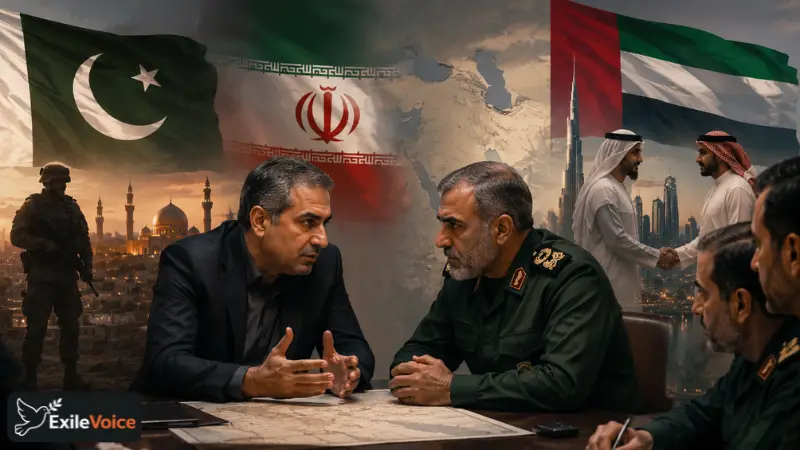
The rapid convergence of strategic leaks and intense backchannel diplomatic engagements underscores a complex, high-stakes realignment in Pakistan's foreign policy within the Middle East. A major indicator of this shift is the hyper-accelerated diplomatic itinerary of Federal Interior Minister Mohsin Naqvi, who functions as a key representative for the military high command. Within a single week, Naqvi executed his second urgent official visit to Tehran, engaging in deep consultations with the top command of the Islamic Revolutionary Guard Corps (IRGC), the powerful state entity that oversees Iran’s external security, intelligence networks, and regional strategic posture. This intensive backchannel communication follows high-level meetings with the Iranian presidency and foreign ministry, confirming that Islamabad is attempting to establish a highly sensitive, covert geopolitical bridge with Tehran.
This sudden closeness with Iran has provoked immense strategic concern across the international community, particularly among traditional Gulf allies. Reliable reports emanating from elite military and diplomatic quarters indicate that the United Arab Emirates (UAE) has initiated a series of subtle backchannel maneuvers to re-engage with Islamabad. This diplomatic pivot marks a significant shift from the UAE's recent aggressive posture, which included the systematic deportation of Pakistani laborers, the enforcement of highly restrictive visa bans, and the sudden demand for the immediate repayment of three and a half billion dollars in sovereign financial loans. As the Emirati leadership witnesses Pakistan actively positioning itself as a critical strategic actor capable of influencing Iranian security decisions, Abu Dhabi is moving to recalculate its leverage, seeking to repair fractured relations before Islamabad permanently realigns with competing regional blocs.
However, this strategic maneuvering unfolds within a highly dangerous international environment, where the United States is concurrently experiencing its own systemic transformations. While Pakistan attempts to balance its relations between Tehran and Abu Dhabi, the domestic political landscape of its primary Western benefactor is undergoing a deep shift toward elite impunity. The recent decision by the United States Department of Justice to completely drop a 100-million-dollar Internal Revenue Service (IRS) penalty and terminate all tax audit investigations against President Donald Trump and his immediate family highlights a parallel erosion of institutional accountability in the West. This development underscores a global trend where ruling families, familial alliances, and powerful executives manipulate state legal structures to secure complete immunity from financial and regulatory oversight.
For Pakistan, the structural challenge remains deep: the state’s reliance on geopolitical maneuvers to secure economic bailouts is facing structural limitations. While the military command attempts to project strength by executing complex, multi-aligned maneuvers with the IRGC and Gulf monarchies, the state’s internal economic foundations remain incredibly fragile. The reliance on external strategic rent, whether through sending troops to Saudi Arabia or acting as a covert intermediary for Iran, cannot compensate for a bankrupt domestic economy. As international intelligence networks intensify their tracking of Pakistani military movements, the country’s overextended foreign policy risks triggering severe diplomatic backlash from a newly assertive and transactional administration in Washington.

