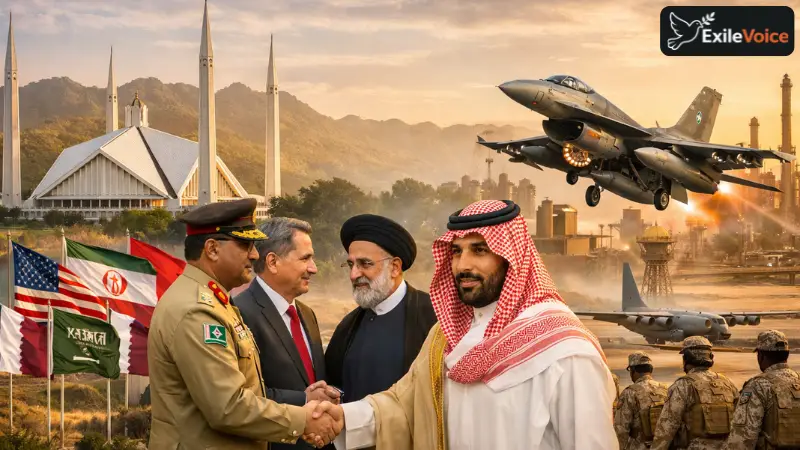
Pakistan is currently experiencing what many describe as its "moment in the sun" on the global stage. By successfully bringing Washington and Tehran to the negotiating table, Islamabad has vindicated its capacity to act as a significant regional power. This diplomatic success is occurring alongside a complex balancing act with the Gulf Cooperation Council (GCC) states. In a move that surprised many observers, Saudi Arabia and Qatar announced a combined $5 billion financial assistance package for Pakistan on the very day the peace talks began. This financial backing is seen as a strategic "pat on the back," ensuring that Pakistan remains financially stable while it executes its role as a mediator.
However, the timing of Pakistan’s military deployment to Saudi Arabia has raised questions. Simultaneously with the peace talks, a Pakistani military force, including fighter jets and support aircraft, arrived at King Abdul Aziz Air Base. This deployment is part of a strategic defense pact aimed at raising "operational readiness" in the region. Analysts suggest this move could be interpreted in two ways: as a show of strength to Iran, signaling that Pakistan remains a security guarantor for the Saudis if diplomacy fails, or as a request from the U.S. to bolster the defense of the Arabian Peninsula during a period of extreme volatility.
The internal dynamic of the Pakistani state remains a subject of intense debate. While the country enjoys reputational gains internationally, it continues to face significant domestic challenges, including hyperinflation, political polarization, and the lingering shadow of former Prime Minister Imran Khan. Critics argue that while the "Vitamin D" of international praise is welcome, it may not address the structural "calcium deficiency" of the Pakistani economy. Nevertheless, the ability of General Asim Munir to navigate the "Trump court" and the Iranian leadership has proven more sophisticated than many anticipated.
Finally, the reaction from regional neighbors, particularly India, highlights the shifting gravity of South Asian influence. While Indian media has occasionally sought to downplay the significance of the Islamabad talks, the sheer scale of the engagement, evidenced by the New York Times and BBC coverage, confirms that Pakistan has successfully made a "dent" in the global diplomatic order. For now, Islamabad is enjoying a rare period where its strategic geography and institutional memory of Cold War-era mediation are being utilized to prevent a global energy crisis and a wider war.