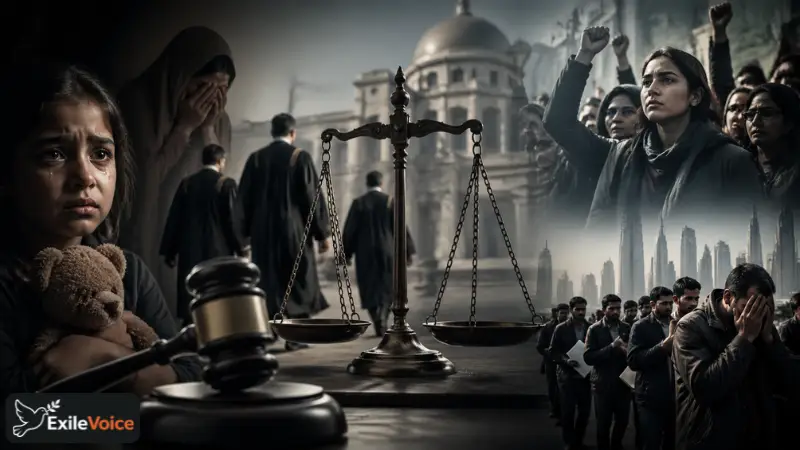
The integrity of Pakistan's judicial system and its commitment to human rights are under intense scrutiny following a series of controversial administrative moves and disturbing reports of rights violations. At the heart of the judicial controversy is the sudden transfer of high-profile judges from the Islamabad High Court. Justices Babar Sattar, Mohsin Akhtar Kayani, and Saman Rafat Imtiaz, often referred to as the "Famous Five" for their independent stances, have been reassigned to disparate regions like Peshawar, Lahore, and Sindh.
These transfers are widely viewed not as routine human resource exercises, but as punitive measures designed to weaken the independence of the Islamabad High Court. When judges are moved like pawns on a chessboard, it signals to the legal community that "boldness" in upholding the constitution will be met with administrative exile. This erosion of judicial autonomy occurs alongside a deepening crisis for religious minorities and women.
The human rights landscape is particularly grim for the Christian community and female activists. The case of Maria Shahbaz, a 13-year-old Christian girl abducted, forcibly converted, and married to a 30-year-old man, highlights a systemic failure. When the courts return such victims to their abductors, it reinforces a culture of impunity. Similarly, the treatment of Afghan activists like Khadija Haidari, who was detained despite possessing valid travel documents, underscores the "disposable" nature of human rights for those without political patronage.
Furthermore, the "Old Pakistan" dynamics are resurfacing through the international targeting of Pakistani citizens abroad. Reports from the New Lines Institute suggest that approximately 15,000 Pakistanis, predominantly from the Shia community, have faced harassment, asset freezes, or deportation from the UAE. This profiling, often based on perceived geopolitical alignments rather than individual actions, reflects a disturbing trend where Pakistani citizens become collateral damage in regional power plays.
The intersection of judicial intimidation and the targeting of vulnerable demographics paints a picture of a state where the rule of law is increasingly selective. While the elite and the "Oligarchs" navigate the system through influence, the marginalized, be they religious minorities, independent judges, or political activists, find themselves increasingly isolated from the protections of the state.