Pakistan is increasingly positioning itself at the center of a rapidly evolving Middle Eastern security architecture, undergoing a significant shift in its diplomatic and military engagement. Historically overshadowed by India's robust economic growth and its deep-reaching relationships with major Western capitals like Washington, London, and Berlin, Islamabad is now outmaneuvering its regional rivals to claim a prominent role on the global stage. Driven by necessity, strategic alignment, and military capability, Pakistan has transitioned from a localized South Asian actor into a pivotal mediator in the high-stakes confrontation between Washington and Tehran.
This diplomatic resurgence is highlighted by highly unusual and unprecedented diplomatic engagements. The recent arrival of the Lebanese military commander in Islamabad serves as a key indicator of Pakistan's expanding sphere of influence. Historically, Pakistan’s area of responsibility has been tightly contained within its immediate South Asian neighborhood and the southern tip of the Arab states. Direct involvement in the Levant, particularly along the highly volatile border conflict between northern Israel and southern Lebanon, was considered outside Islamabad's traditional geographic scope. However, as the broader Middle Eastern conflict intensifies, Pakistan is finding itself deeply intertwined with the security dynamics of the region.
The diplomatic movement extends beyond Lebanon. Pakistan's Interior Minister, Mohsin Naqvi, recently traveled to Iran to deliver a critical message directly to Supreme Leader Ayatollah Ali Khamenei on behalf of Pakistan's military leadership. In Pakistani statecraft, sensitive diplomatic messages of this magnitude are traditionally handled by the Foreign Ministry. Entrusting this mission to the Interior Minister, a figure closely aligned with Chief of Army Staff General Asim Munir, signals that Islamabad is communicating at an advanced institutional level. This indicates that Pakistan is actively moving between conflicting global powers to negotiate terms of stability.
This enhanced diplomatic profile is unfolding alongside a fundamental reconfiguration of the regional balance of power. Observers note that Iran has successfully managed to expand the scope of its ongoing negotiations with the West. Rather than allowing talks to center exclusively on its own domestic concerns, such as frozen financial assets, maritime security in the Strait of Hormuz, or its nuclear development program, Tehran has effectively tied its diplomatic resolution to the security of its regional proxies and allies. By embedding the Lebanese front into the broader negotiation matrix, Iran has introduced a complex layer of variables that Western negotiators must now navigate.
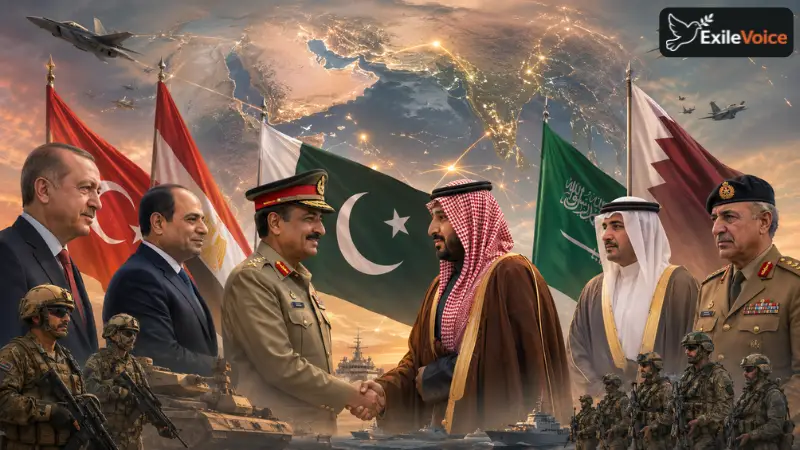
Concurrently, a new pan-Islamic security alliance is materializing across the region, frequently referred to by regional defense analysts as an emerging "Islamic NATO." This collaborative framework brings together five of the largest militaries and economies in the Muslim world: Pakistan, Turkey, Egypt, Saudi Arabia, and Qatar. While three of these states are Arab, the inclusion of non-Arab powers Turkey and Pakistan creates a highly potent strategic axis. This bloc is bound by a shared interest in regional self-preservation and a desire to reduce the pervasive footprint of foreign military installations across the Middle East.
Within this emerging configuration, Turkey and Pakistan function as the primary structural anchors of the alliance. Turkey offers a modern, highly industrialized defense sector backed by its formal integration into the NATO framework. Pakistan, conversely, brings unmatched strategic deterrence through its status as the sole nuclear-armed power in the Muslim world. The synergy between Turkey’s conventional technological sophistication and Pakistan’s strategic nuclear umbrella forms a comprehensive security framework.
This collaborative effort is already altering long-standing security arrangements. In the wake of recent high-profile regional security breaches, including targeted operations within allied territories, traditional Gulf powers have actively fast-tracked their defense integration with Islamabad. Last October, Saudi Arabia and Pakistan inked a comprehensive strategic military partnership that established a mutual defense understanding. This pact essentially positions Saudi Arabia under Pakistan's broader defense and strategic umbrella, signaling a structural shift away from an absolute reliance on Western security guarantees. As these historic alliances deepen, the intersection of South Asian and Middle Eastern geopolitics is creating a new, highly complex landscape of international relations.