

As the moon was sighted for Eid-ul-Fitr in 2026, the atmosphere across Pakistan was a complex blend of spiritual relief and profound economic anxiety. For 77 years, the nation has grappled with the logistical and theological challenge of synchronizing its lunar calendar with the rest of the Muslim world. However, this year, the focus shifted from the "sighting of the moon" to the "struggle of the commute."
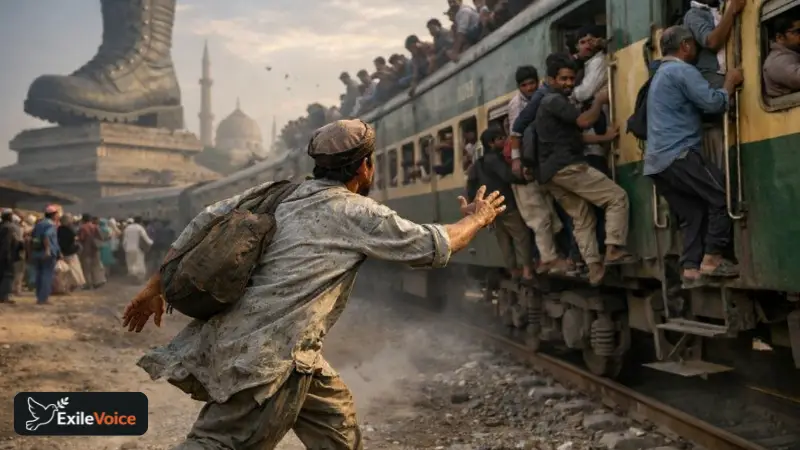
A striking visual from the festivities, captured by Reuters and discussed extensively by analysts, depicted a common Pakistani man literally chasing a moving train to reach his village for the holidays. This image serves as a poignant metaphor for the current state of the Pakistani populace: a desperate race to maintain tradition and family ties amidst crumbling infrastructure and a punishing economy. While the elite navigate the holiday with relative ease, the average citizen faces a harrowing journey marked by overcrowded transport and soaring costs.
The "train-chaser" represents the resilience of a nation that refuses to let institutional failures dampen its spirit. Yet, this resilience is being tested to its breaking point. The video commentary highlights a growing disconnect between the rulers and the ruled. While official narratives often focus on grand strategic shifts or institutional stability, the micro-level reality is one of survival.
Furthermore, the satirical take on "Boota", a symbolic representation of the establishment, contrasts the grounded struggles of the civilian population with the insulated nature of the power centers in Rawalpindi and Islamabad. This dichotomy reveals a society where "Job Security" is the primary motivator for the ruling class, leading to a state of "insecure governance." When leaders are more concerned with their own tenure than the welfare of the passenger hanging off the side of a train, the social contract begins to fray.
Ultimately, Eid in Pakistan remains a testament to the strength of the people. Despite the mockery often aimed at the state's inability to organize a unified holiday or provide safe passage for its citizens, the act of "reaching out" to estranged friends and family remains the country's greatest social lubricant. The challenge for 2026 and beyond is whether the state can finally catch up to the pace of its people, providing them with a journey that doesn't require a life-threatening sprint.

