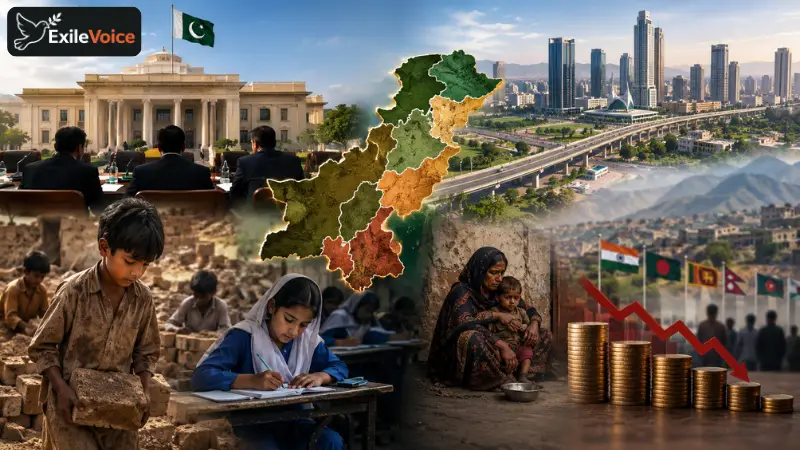
The unveiling of the official Economic Survey of Pakistan has exposed severe structural cracks in the national economy, painting a grim picture of domestic fiscal health just hours before the presentation of the federal budget. Despite desperate efforts by administrative bodies and state apparatuses to project an image of stabilization, the core macroeconomic data released by the Ministry of Finance confirms an alarming contraction across major productivity sectors, alongside a historic surge in public debt and domestic poverty rates.
According to the government's highly manicured figures, an estimated 72.8 million citizens are now officially classified as living below the poverty line. Independent economic observers warn that the actual figure is likely double the state’s admission, potentially encompassing over 130 million individuals. To understand the gravity of being "below the poverty line" in the current fiscal ecosystem, one must analyze the raw monetary data. The average monthly income for individuals in this bracket is under 8,500 Pakistani Rupees. When converted to international currencies at current market rates, this translates to an income of less than 30 US dollars per month for an entire household. This microscopic budget strips families of basic nutritional security, forcing over a third of the population to survive on less than half of their required monthly caloric intake.
Concurrently, the state has admitted to a dramatic rise in unemployment, reporting that the number of completely jobless individuals has expanded from 4.5 million to nearly 6 million, driving the national unemployment index upward. This widespread lack of purchasing power has triggered a severe drop in the domestic consumption of essential commodities. Market data indicates a sharp contraction in the purchase and retail movement of basic foods, including flour, milk, meat, lentils, and fresh vegetables, confirming that the average citizen can no longer afford essential nutrition.
The crisis is heavily compounded by an unprecedented collapse in industrial energy consumption and agricultural input. In a shocking disclosure, the Economic Survey highlights a 42.6 percent decline in petroleum and fuel consumption within the manufacturing sector over the past fiscal year. An energy drop of this magnitude signals a massive slowdown in factory operations, supply chain logjams, and a freeze on industrial expansion.
The situation is even more critical in the agricultural sector, which forms the spine of the rural economy. Petroleum product consumption in agriculture fell by a staggering 61.7 percent. This decline directly correlates with a drop in tractor usage, a reduction in the transport of harvested goods via rural trolleys, and a widespread shutdown of tube wells due to unaffordable fuel costs. This sharp decline in agricultural inputs raises serious concerns about food security in the upcoming quarters. While the real economy contracts, the national debt architecture has ballooned out of control. Total public debt liabilities reached a record 83,285 billion Pakistani Rupees by March, with fiscal projections indicating the tally will breach the 100,000 billion mark by the close of the financial year. To place this in a broader historical perspective, when the previous democratic administration was ousted, total liabilities stood near 44,000 billion Rupees, meaning the national debt load has effectively doubled under the current setup.
To bridge this massive fiscal gap, the state is increasingly leaning on provincial resources. High-ranking financial officials have publicly lauded regional administrators in Khyber Pakhtunkhwa for their "generosity" in diverting local provincial revenue streams toward centralized defense allocations and military spending. This strategy leaves the administrative provinces with depleted cash reserves to fund local healthcare, education, and municipal infrastructure. Additionally, the Federal Board of Revenue discovered that 8,700 wealthy individuals hold an undocumented 750 billion Rupees across various banking institutions without filing matching income tax returns. This indicates that the state is planning aggressive bank asset seizures and forced wealth audits to prevent a total sovereign debt default.