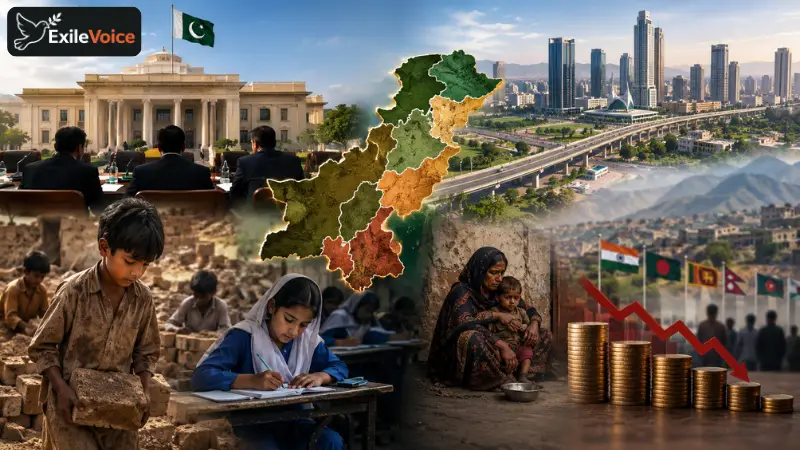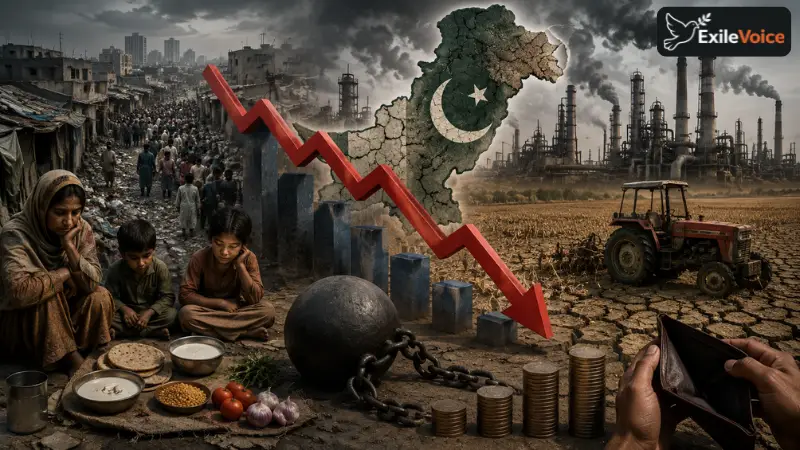
The unveiling of the latest Economic Survey of Pakistan has exposed severe structural vulnerabilities within the nation's macroeconomic framework, signaling an impending crisis for industrial sustainability and civic welfare. While official state representations frequently attempt to present a sanitized version of financial metrics, a granular analysis of the document reveals deep discrepancies between state-sponsored optimism and empirical market realities. The data officially acknowledges that approximately 72.8 million citizens have fallen below the poverty line. Independent economic evaluations suggest this figure significantly understates the crisis, placing the actual count closer to 130 or 140 million individuals trapped in absolute poverty.
In macroeconomic nomenclature, operating below the poverty line translates to an inability to secure basic caloric requirements. The survey indicates that the average monthly income for this massive demographic has plummeted below 8,500 Pakistani Rupees, an amount equivalent to roughly 30 US dollars at current market exchange rates. Managing a household on approximately one dollar per day presents an existential crisis that severely stifles domestic consumption. This widespread financial distress completely halts demand-side economic drivers, triggering a negative cyclical effect across consumer goods sectors, retail markets, and domestic supply chains.
Simultaneously, the national labor market faces systemic contraction. Official state figures report a rise in registered unemployment from 4.5 million to 5.9 million individuals. This metric is widely understood to account only for the formalized urban sector, ignoring massive hidden unemployment in rural and informal parallel economies. The documented unemployment rate has escalated from 67 percent to 71 percent within specific structural frameworks. This indicates an economy that is systematically losing its capacity to generate sustainable livelihoods. This labor market failure is visible in the sharp decline in the domestic consumption of essential commodities, including flour, milk, meat, poultry, lentils, and basic vegetables. When a population reduces its intake of primary dietary staples, it points to severe financial distress that directly impacts corporate revenue models across the fast-moving consumer goods sector.
The industrial and agricultural backbones of the country are experiencing unprecedented technical contraction. Analysis of energy consumption metrics shows that industrial oil and gas consumption has dropped by 42.6 percent. Because industrial output is directly linked to energy usage, a reduction of this scale indicates a major slowdown in manufacturing, factory operations, and infrastructure projects.
The situation in the agricultural sector is even more severe, with petroleum product consumption falling by 61.7 percent. This decline reflects a sharp drop in mechanized farming activities, including tractor utilization, transport logistics, and tube-well operations. Agriculture has traditionally served as a critical buffer during economic downturns, but it is now succumbing to high input costs and supply chain disruptions.Compounding these real-economy challenges is an escalating sovereign debt crisis. Total public debt has surged to 83,285 billion Pakistani Rupees as of March, and projections suggest it will surpass 100,000 billion Rupees by the close of the fiscal fourth quarter. For context, this represents a massive increase from the 44,000 billion Rupees recorded at the end of the previous administration. This rapid accumulation of debt creates a heavy fiscal burden, as debt servicing costs now consume the vast majority of federal tax revenues. As a result, the state is forced into a continuous cycle of borrowing to pay off existing loans, leaving virtually no fiscal room for developmental spending, infrastructure upgrades, or human capital investment. This institutional debt trap harms sovereign credit ratings and crowds out private sector investment, leaving commercial enterprises to navigate high interest rates and volatile exchange rates.